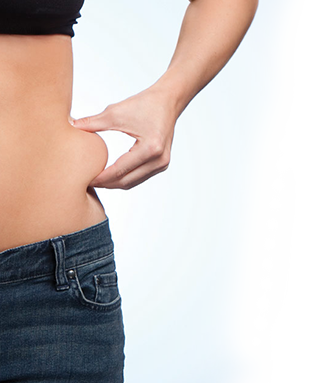
A tummy tuck, sometimes called abdominoplasty, is a cosmetic surgical procedure used to restore the appearance of the abdominal area following weight loss. Excess weight around the midsection causes the skin and muscles to stretch. After losing the weight or giving birth, many people find that the skin remains slack and loose. A tummy tuck makes your stomach flat and tight again*.
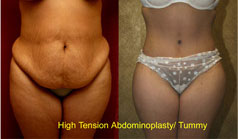
Plastic surgeons in Los Angeles and Beverly Hills perform various types of tummy tucks, or “abdominoplasty” procedures. For most doctors, the goal of a standard tummy tuck is to remove the loose, hanging abdominal skin and tighten the abdominal muscles. Others routinely perform “mini-abdominoplasty,” which only removes excess lower abdominal skin and does not tighten the abdominal muscles. Does this type of tummy tuck give women from the tight abs that they desire? Does a standard tummy tuck, at best, give you the bikini body such as those seen on young models in Hollywood glamour magazines? Women demand the best figure that they can get! This is why these women are, instead, choosing to have High Tension Abdominoplasty™*. *Results May Vary
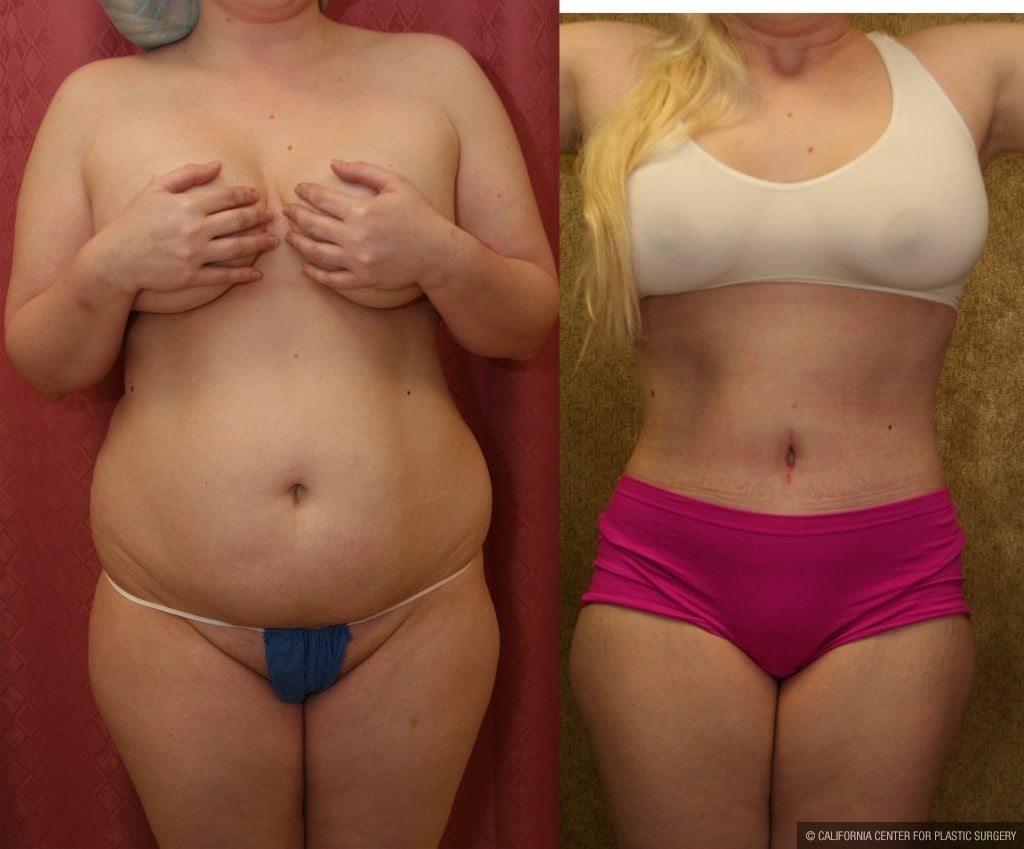
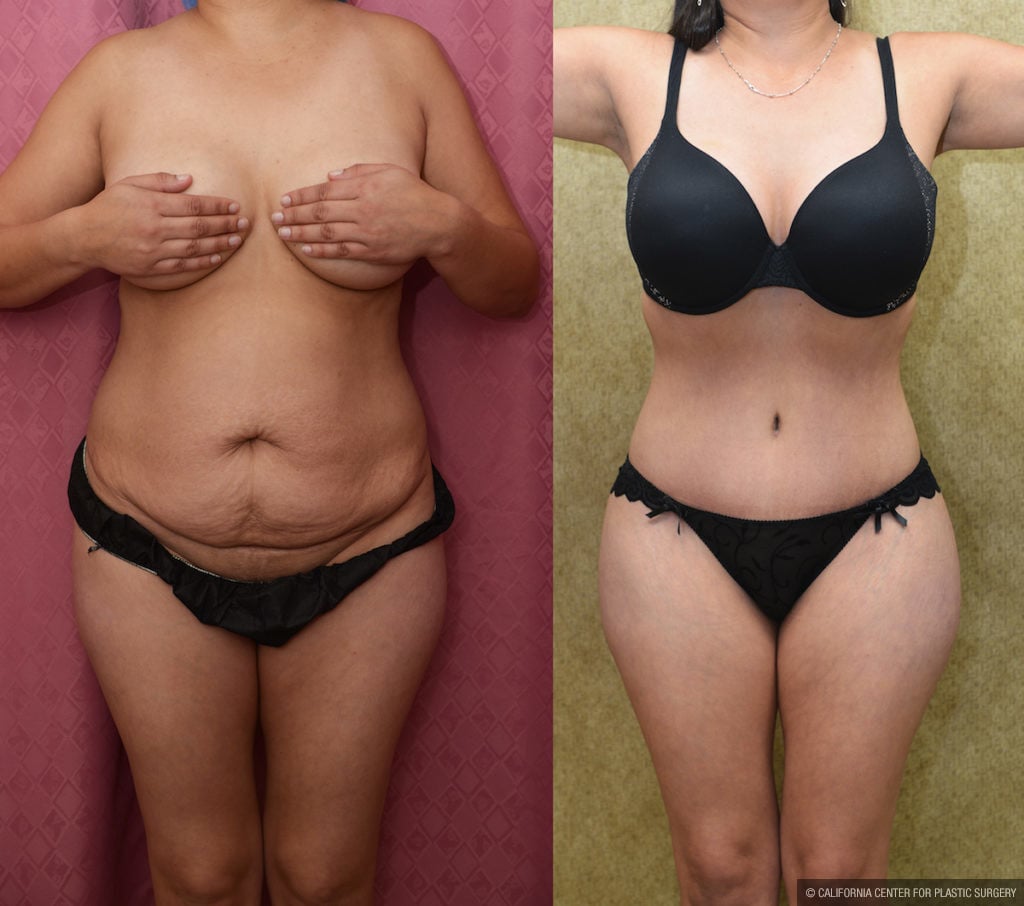
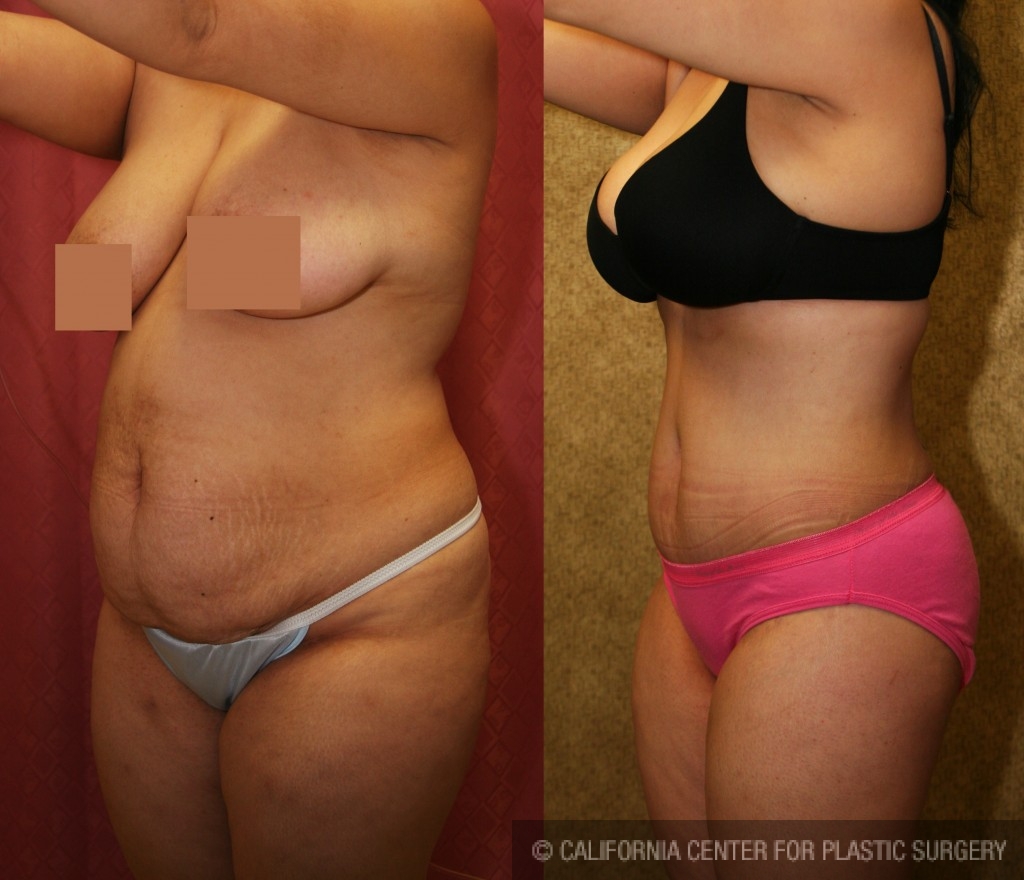
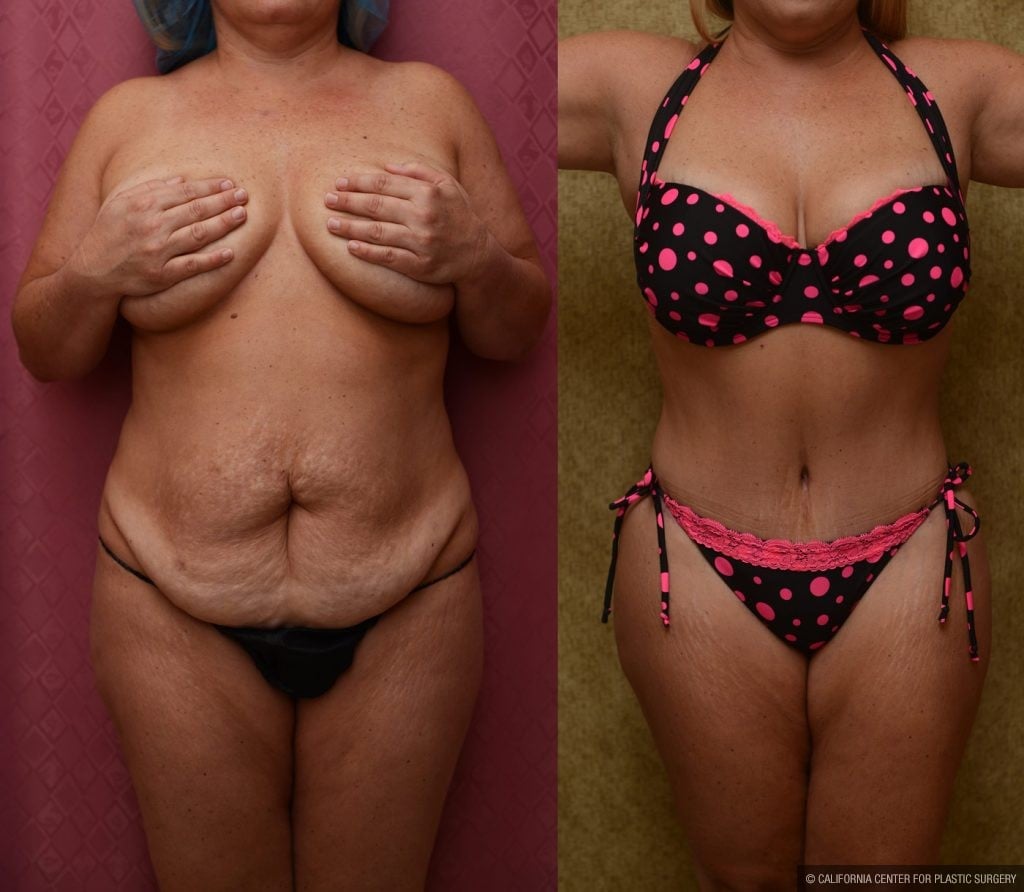
Tummy Tuck Before & After Pictures of Los Angeles Women who have undergone Abdominoplasty after pregnancy or weight loss are shown with photos of tummy tuck results.
As noted in the Before & After Tummy Tuck Pictures stretch marks and loose, hanging skin folds are removed.
The stretched out abdominal muscle, or diastasis recti, is tightened to give women a flat & firm tummy.
Abdominoplasty after pregnancy gives women a smooth & tight tummy, to restore their figure & shape to that of before pregnancy.
Repair of umbilical hernia and Diastasis Recti with a Tummy Tuck in Los Angeles
Pregnancy not only stretches out the abdominal skin, but also the abdominal muscles, resulting in a separation of the Rectus Abdominal muscles, which is called a Diastasis Recti. In worst cases it can also result in an umbilical or ventral hernia. As shown in this tummy tuck before and after picture, this young woman had developed a large diastasis recti and umbilical hernia from delivering and large baby. Dr. Sean Younai, who is a Board-Certified Plastic Surgeon, repaired her umbilical hernia and the large separation of her abdominal muscles with her tummy tuck. This way, she did not have to have an additional belly button hernia scar! At the same time, he shaped her body to give her a curvaceous figure after pregnancy. Visit www.Beautifulfigure.com to see more tummy tuck before and after pictures and to learn more about repair of abdominal hernias, and surgery recovery.
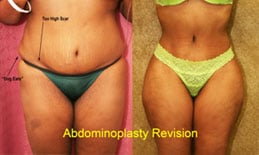
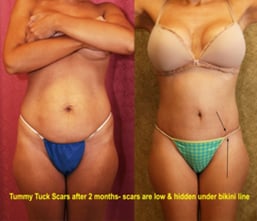
Tummy Tuck Scars Before and after Pictures- How to avoid bad scars
The worst thing that can happen to you with a tummy tuck is getting a bad ugly scar. What to look for in order to avoid a bad abdominoplasty scar. 1. Your plastic surgeon should place the tummy tuck scar low, so that it can be hidden under a G-String bikini. 2. Your plastic surgeon should design the abdominoplasty incision, in order to avoid “dog ears” or excess protrusions on the sides. 3. Your plastic surgeon should build you a belly button that is small and natural looking. Obviously, there are no ways to avoid scars, but you should choose an experienced plastic surgeon who specializes in tummy tuck surgery. You should also review their tummy tuck before and after pictures, in order to evaluate the scars and the belly button, so you don’t get surprised. In order to see many tummy tuck before and after pictures, including abdominoplasty scar photos, visit www.beautifulfigure.com
Liposuction vs. Tummy Tuck: Which is right for You?
Liposuction removes excess localized fat while a tummy tuck primarily removes loose skin. More specifically, liposuction is best for people with good skin elasticity, younger age, and those who have not had pregnancy and stretch marks. While liposuction can tighten the skin to some extent, it cannot make loose skin shrink to nothing. On the other hand, tummy tuck is better for older women, who have had pregnancies, weight loss, excess skin, and stretch marks. While liposuction does not How to get rid of fat flabby arms with arm liposuction in Los Angeles Arm liposuction can sculpture and shape women’s arms so that they can enjoy wearing sleeveless tops in Los Angeles. In these arm liposuction before and after pictures you can see many examples of women who had successfully undergone arm liposculpture by Dr. Younai during the last 27 years. Dr. Younai was able to skillfully tighten their arms with just liposuction, and without the need for arm tuck or brachioplasty which involves scars. Dr. Sean Younai, who is a Board-Certified Plastic Surgeon in Los Angeles employes a special arm liposuction technique that tightens and shapes women’s fat arms who were frustrated with futile arm exercises and skin tightening lasers.
Tummy Tuck is major surgery that can be performed only after any chronic health conditions, such as thyroid disease, diabetes; high blood pressure and arthritis have been optimized. Nonetheless, depending on the patient, it can be safely performed simultaneously with procedures such as Breast Lift, Breast Augmentation and Facial Rejuvenation procedures such as Eyelid Surgery.
There are also other trunk lift procedures that are similar to a tummy tuck. For example a Panniculectomy is a type of abdominoplasty where only the redundant abdominal pannus is removed without tightening the abdominal wall. This is usually reserved for those with extremely large pannus that are too sick to undergo a lengthier procedure such as an abdominoplasty.
A body lift is a combination of a tummy tuck in the front and a buttock lift in the back. With this procedure the surgeon makes a circumferential incision around the waist and lifts the entire lower body. A body lift is reserved for those with much redundant and loose abdominal and lower body skin, such as those who have had Gastric Bypass Bariatric surgery. A belt Lipectomy is another version of a body lift where a belt-like section of the trunk skin flap is removed circumferentially.
A thigh lift is procedure designed to lift sagging thighs*. A thigh lift mostly lifts only the inner thighs, while the outer thighs and buttocks are lifted with a body lift.
Dr. Younai often performs “High-Tension Tummy Tuck or Abdominoplasty.” It is unique in that it not only tightens the abdominal wall but also pulls up and tightens the thighs and the buttock*. By repairing the loosened abdominal muscles, this also narrows the waistline*. It removes a majority of the stretch marks by removing the loose skin below the “umbilicus,” or navel*. Finally, it re-creates the belly button by removing the stretched out skin around it, making it look deeper and tighter*.
There are several types of Tummy Tuck, or Abdominoplasty, procedures. These differ depending on the extent of the abdominal wall tightening and removal of loose skin and stretch marks*.
*Results May Vary
How is this accomplished? The first step is an incision that extends from hip to hip along lower pubic area.
In people with excessive fat in the hips and flanks, these areas are suctioned in order to shape the waist and to form the buttocks and flanks. The umbilicus (“belly button”) is disconnected from the abdominal skin, and after removing the loose skin along with its stretch marks, it is reattached to the abdomen. Drains are inserted to remove excess fluid as it accumulates.
The final result is a tummy that is tight and flat, a waist that is narrow and curvy, thighs and buttocks that are firmer, a belly button that is sexy, and an abdomen that is firm and youthful*.
A Mini Tummy Tuck or Mini-Abdominoplasty is not as extensive as a Tummy Tuck or Abdominoplasty, requiring only one hour of surgery as opposed to the three to four hours needed for a Tummy Tuck. Since it does not usually involve tightening of the abdominal muscles, it is reserved only for those who only have limited amount of loose skin or stretch marks in the lower abdomen or above the pubic bone. Also, it does not alter the shape of the belly button*. A Mini-Tummy Tuck does not involve an extensive undermining and tightening of the abdominal skin, so it can be safely combined with full Liposuction of the abdomen and flank. Therefore, the combination of Mini-Tummy Tuck with Liposuction might be a better choice for those with excessive fat, but limited looseness of the abdomen*.
A mini tummy tuck is best for patients with a pooch below the bellybutton*. It is a more limited procedure than the traditional procedure. A smaller incision below the bikini line is used for this surgery. The rest of the procedure is similar: the muscles below the bellybutton are tightened and excess skin and fat are removed from this area. Liposuction is still used in most cases to make your lower stomach as flat as possible*. The entire procedure takes about 90 minutes, hence the term “mini”.
While the incisions for a “full” Tummy Tuck can extend from hipbone to hipbone, those of a Mini-Tummy Tuck are much shorter, usually extending only the width of the pubic area and similar to a C-section scar*. *Results May Vary
A traditional tummy tuck starts with an incision from hip to hip, which will be hidden below your bikini line. Dr. Younai removes the excess skin and may use liposuction to get rid of any remaining fat. The abdominal muscles are tightened using sutures to make your belly flat*. The skin is pulled firmly over the top and the incision is closed. In many cases, stretch marks on the excess skin are removed*. Dr. Younai also adjusts the underlying tissue to raise the thighs and buttocks during the procedure*.
Men and women who have loose, hanging skin and weak abdominal muscles with a protruding belly are candidates for a full Tummy Tuck. On the other hand, those who have a firm abdomen, but who have redundant lower abdominal skin folds are better served with a Mini-Tummy Tuck, also known as a Mini-Abdominoplasty.
There are several life changes that cause your abdominal wall to lose its strength and tightness, and to develop excessive, loose skin. Examples of these are pregnancy and massive weight loss — such as the large weight losses from Gastric Bypass or “Bariatric” surgery.
Pregnancy
Almost all women develop stretch marks and loose lower abdominal skin as a result of pregnancy. They often complain of a lower abdominal pouch that protrudes and is unsightly when wearing tight clothes or low-cut shirts.
Especially during the last months of pregnancy, the rapid growth of the uterus stresses the lower abdominal wall and skin. Rapid stretching causes the deeper layer of skin to break, thereby forming stretch marks centered mostly in the lower abdomen, and covering the flanks and hips. The rapid stretching also causes the separation and stretching of the abdominal muscles that give the belly its core strength. The resulting weakness causes a pouch to develop in center of the abdomen. Because there is no longer adequate muscle support, exercise and dieting are ineffective in tightening the abdomen.
Massive Weight Loss
Men and women who have lost large amounts of weight by any means, including those who have dieted or have lost it through “Gastric Bypass” — also known as “Stomach Stapling” or “Bariatric Surgery” — are often left with folds of skin that hang like an apron. This is not only demoralizing for those who have gone to the effort of achieving a significant weight loss, but it also makes personal hygiene, exercising and wearing normal clothes difficult.
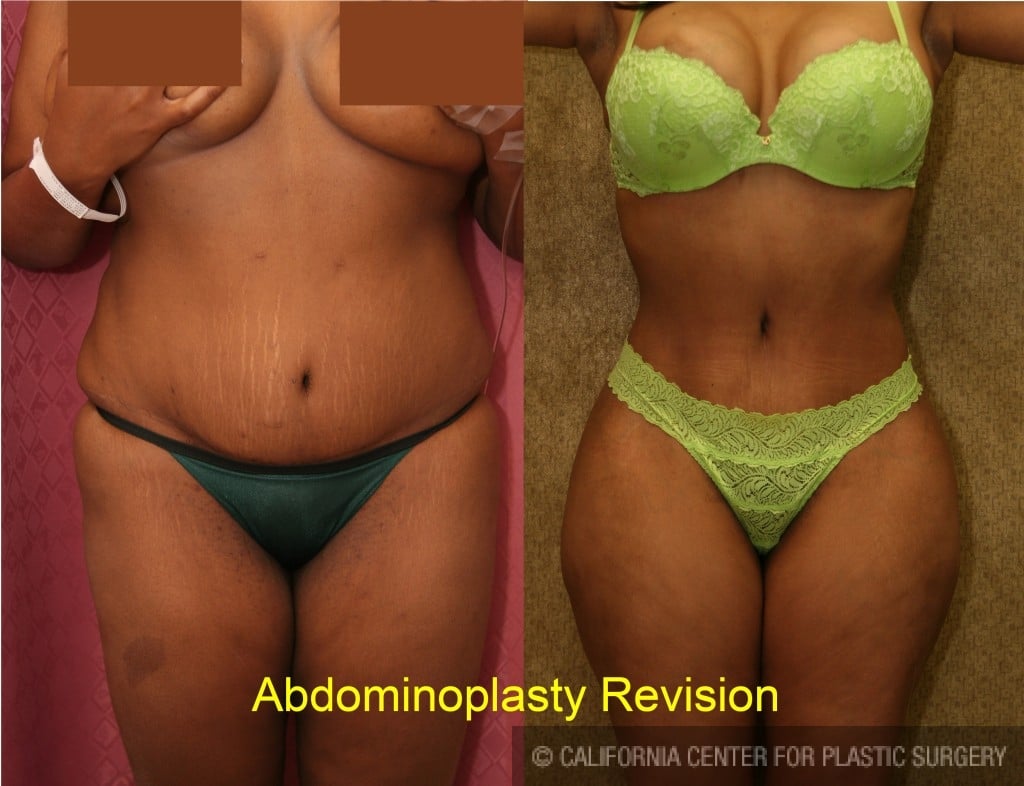
Revision Tummy Tuck Surgery
Revision tummy tuck surgery can be a small or large scale restoration procedure that can be performed soon after the original operation or in the years that follow. Like the traditional surgery, a revision surgery is done on an outpatient basis under general anesthesia at our accredited Los Angeles facility. During the procedure Dr. Younai removes excess skin and re-tightens overstretched abdominal muscles. Even in terms of scar revision this surgery can be performed to correct scar malposition from the original surgery*.
Reasons for a Tummy Tuck Revision
Excess skin
Overstretched abdominal muscles
Loss of definition
Distorted belly button
Residual fat deposits
Preparation
The surgeon will provide very specific instructions prior to surgery so you will have an optimal and safe experience. These include- what medications to avoid to prevent excessive bleeding and bruising, required medical exams, what to eat and drink prior to surgery, and the prescription of an anti-nausea pill to take on the morning of the surgery. In all cases, you will be asked to have a reliable friend or family member take you home after the surgery, as you will not be allowed to drive. Some procedures do require overnight stay in an aftercare facility or a hospital.
Also, tend to all of your chores and to do things before your surgery so you don’t have to worry about taking care of things early during your recuperation. This means if you usually clean the house, you should do so in advance of your surgery. Have your hair cut and colored, wax your legs, pay your bills, and take your dog to the vet before your planned day of surgery!
Pre-Operative Instructions
If you are older than 45 years, or have heart disease or diabetes, we require a pre-operative EKG, which would either be done by your internist, cardiologist, or at our facility. Heart disease and all other medical illnesses need to be optimized, and you be cleared by an internist or specialist prior to surgery.
Pre-operative laboratory blood and urine tests are done usually within 10 days of your surgery date. If you do have health insurance this might be covered, otherwise, the laboratory will charge you.
If you are a smoker, live with a smoker, or use Nicotine products (patch, gum, or nasal spray) notify your plastic surgeon well in advance of your surgery. You are not allowed to smoke or use Nicotine products for two weeks prior to and two weeks after your surgery, because it greatly increases your risk of having complications including loss of abdominal skin after surgery.
If you are anemic, or have a low blood count, please notify our office well in advance of surgery so that we can start you on Iron supplement. You cannot have a Tummy Tuck if you are anemic.
In order for you surgical incisions to heal, your nutritional state must be satisfactory. You cannot be on any diets for several weeks before surgery. Also, if you have had any prior surgery (i.e. bariatric surgery) that reduces your ability to absorb vitamins and nutrition, you must be on adequate supplements as per your primary physician.
If you have had a history of forming blood clots in your legs, deep venous thrombosis (DVT), Pulmonary Embolism (PE), or are known to have hypercoagulability, you need to notify your surgeon prior to surgery, so that necessary precautions can be taken for your surgery.
Do not use birth control pills or any type of estrogen hormone replacement or supplement for several weeks before your surgery, because they can increase your risk of developing blood clots, DVT or PE.
If you have specific medical illnesses, allergies, or physical handicaps, please notify our staff during your pre-operative visit.
Please refrain from taking any Aspirin, Aleve, Advil, Motrin or other NSAID for ten days before your surgery. These drugs can increase the incidence of bleeding and bruising.
Do not drink or eat after midnight, the night before your surgery. This means no coffee or breakfast on the morning of your surgery. You should take all your medications with a little water. If you have to take diabetic medication or insulin, be sure to have instructions from our office on how much of it to take the morning of surgery.
Please remove and leave behind all jewelry, watches, and body rings before you come in for your surgery. Please do not wear any makeup or perfume.
Prior to your surgery you will be given a prescription for pain medication, antibiotics, and nausea medicine. Get these filled in advance and bring them with you to surgery.
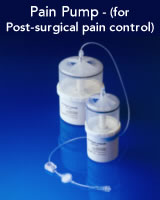
Some patients elect to purchase a “Pain Pump” for their surgery. Pain Pumps are new devices that can help patients with post-operative pain. Pain Pumps are small reservoirs (size of a walkman) of local anesthetic which infuse Lidocaine or Marcaine into the wounds for the first 24-48 hours after surgery. Pain Pumps are sent home with the patient. Because they help keep the surgical areas anesthetized, they reduce the need for narcotics, therefore, lessening the post-operative incidence of nausea. While some patients like using them, others feel that they are not that effective and are instead cumbersome and hinder their mobility. Therefore, Dr. Younai gives his patients the choice of purchasing a Pain Pump at cost if they wish to have them.
Before leaving home for your surgery, take one “nausea pill”- COMPAZINE – with a little water.
Please wear comfortable and loose clothing the day of surgery. It would be helpful if you wear front open tops and loose sweat pants.
We ask you to check the fit of your compression garments in advance, and to bring two with you to surgery.
Set up your bed in an area that is easily accessible and that you don’t have to climb multiple stairs. Have bunch of pillows or cushions available so that you can place them behind your back and under your knees after the surgery.
You must make arrangements for a responsible adult friend or family member to take you home after surgery. You are not allowed to drive yourself home or take a taxi. After surgery, this caregiver is required to stay with you and to monitor and assist you for at least the first 24 hours after surgery. If you don’t have such a person, or live far away, or are having extensive or multiple procedures please let us know in advance so that we can help you make arrangements for a stay at an after-care facility or hospital.
Following surgery, drains are placed to allow the area to remove any excess fluid. Most patients are able to return home the same day, after being monitored for safety*. Thanks to recent advances, the level of discomfort following surgery is at an all-time low*. In fact, most patients are able to return to work and non-strenuous activities within 14 days*. Dr. Younai is available to consult throughout your recovery and will let you know when it is alright to resume regular activities.
Because it is a less invasive procedure, recovery after a mini tummy tuck is typically much shorter*. You should be able to stand almost immediately after surgery*. Most people are able to go back to work in just a few days, with complete recovery achieved in about a month*.
Although these procedures are different, their post-operative course is very similar. These procedures usually take from three to five hours depending on the size of the patient, and the extent of the surgery.
Following surgery, patients are monitored in the Recovery Room for several hours until they are stable enough to go home, or to an aftercare facility.
In the Recovery Room, patients receive pain medications, antibiotics, intravenous fluids, and anti-nausea medications. Although pain medications help make your pain tolerable, they do not remove pain altogether. During this time, you are also kept warm with special warming blankets and your calves are being massaged by special stockings. Because mobility of your extremities is very important to keep your circulation going to avoid formation of blood clots, your nurse might assist you in taking a few steps.
Within the first three hours after your surgery, it is not wise to drink much liquids because of the risk of vomiting. It is best to wet your mouth.
After surgery it is normal to feel tight around the tummy, thighs, and buttocks. You would be wearing an abdominal or body girdle. There might be some drainage or soiling of your girdle from your wounds, which is normal. Do not change, remove, or manipulate your girdle until instructed to do so by your surgeon. Make sure that the girdle is not too tight and that its waist is kept riding high at the level of your breast fold.
Patients have several drains that attach to a bulb-like collection container. The nurse will show you and/or your family how to record their output, and to empty them periodically. Make sure that there is no tension or pulling on these drains.
In the bed, patients are positioned in a semi-sitting up position with the knees and the back bent. This reduces the tension on the tight abdomen and thighs. Once patients leave the recovery facility they are to remain in a semi-erect position when they are walking. Sitting up in a chair or a couch is absolutely fine. Make sure that you have enough cushioning and support. You may also lie on your sides, as long as you keep your body posture bent for the first 4 days after surgery.
Most people develop muscle spasm in their back or side muscles as a result of being in a bent position for several days. This can be helped by having your significant other massage your back muscles and apply gentle heat to these areas. You should not apply heat or cold to your surgical areas because it can potentially damage the circulation in these areas and result in complications.
Although it is good to stay well hydrated, do not drink too much plain water, fruit juices, or carbonated drinks, because they can make you more nauseated. Mostly, drink Gatorade, Ginger ale, or tea.
It is good to be ambulatory and to stay sedentary. Having said this, take your time with things and expect to slowly increase your activities day by day.
Most people can become more independent after one week and be able to drive after 10-14 days. This can vary depending on your age, general stamina, extent of your surgery, and the level of pain medications that you take. You are not allowed to driven while taking narcotics.
Although you will gradually feel well and independent by several weeks, it is not unusual at times to feel tired or easily get exhausted for up to several months after your surgery.
Most patients are allowed to take a shower by the third day after their surgery, but wait until your surgeon specifically approves this and gives you instructions with respect to caring for your incisions and drains. You should refrain from sitting in a bath, Jacuzzi, or going in a public pool or ocean for about 6 weeks after your surgery.
The Skin of the areas where you had surgery does become dry, and at times, itchy. Massaging with a thick lotion is very helpful. Some people like to put vitamin-E or “scar creams” over their scars. Most scientific literature has not shown a significant benefit of these “scar creams” over plain Vaseline
How painful is tummy tuck or body lift?
A standard Tummy Tuck or Abdominoplasty feels, more or less, like a C-Section*. It is more painful than Liposuction, Breast Augmentation, Tubal Ligation, Rhinoplasty, Breast Biopsy, and less painful than Hysterectomy, shoulder surgery, or back surgery*.
When Can I Lift My Children Again?
You should not do any heavy lifting for about eight weeks from the date of your surgery. You should be prepared to have spouses, or other loved ones, lift your children so that you don’t risk ripping your stitches. After the first week you may hold your young baby in your lap, but do not lift them up unless they weigh less than a gallon of milk.
When Can I Exercise Again?
You may start some light walking as early as 10-14 days after surgery. As you feel more comfortable you can increase your activities, but you cannot lift anything heavier than a gallon of milk for the first two months. Heavy lifting can cause your internal stitches to rip apart, resulting in a hernia that will require corrective surgery. Jogging is usually acceptable after three to four weeks, as long as you are wearing your girdle. You can do arm and leg weight training in three to four weeks as long as you don’t feel that you are straining your abdominal and back muscles*.
When can I go back to work?
This depends on the normal level of activity that is expected of you at work. There is a difference in timing for those who have desk jobs, versus those who are required to stand, walk, bend, push, and pull constantly throughout their workday. Most people return to non-strenuous jobs within 10-14 days after a tummy tuck. If your job is very strenuous, you might have to take more time off, but usually no more than four to six weeks. For those who are having Body Lift and Thigh Lift procedures, it usually it takes longer to go back to work depending on their age, stamina, extent of surgery and job requirements*.
When Can I Resume Sexual Relations?
It depends on what you are planning to do! More or less, follow the same restrictions as for exercising. You cannot strain your abdominal, thighs, and back muscles greatly for the first six to eight weeks. Having said this, it is very helpful for your body, soul and psyche to have intimate relationship early on. This will also be beneficial for your significant other*. They are most likely as scared as you are; and are afraid to do anything that might hurt you. Don’t be afraid. Proceed as is comfortable for both of you.
What Kind of Emotions I Might Anticipate Following My Tummy Tuck?
Before surgery most patients are very happy, excited, and looking forward to undergoing their body transformation. Afterwards, they often have mixed feelings*. Some of this is caused by the period of disability. Sometimes, people have not yet adjusted to their new body and look. Depending on the person as well as their surroundings, people respond differently to this change. Although most people feel cheerful and are happy with their new body, few do feel regret or have a difficult time psychologically adjusting to it*. This can affect their social or marital relations. If you are having these very normal feelings, be sure and discuss them with your family doctor or plastic surgeon. *Results May Vary
The first thing that I thought about when my wife told me that she wanted to have a tummy tuck was- what would her tummy tuck scars look like? Here I was, as a plastic surgeon who specializes in tummy tucks, worried about my wife’s tummy tuck scars! I guess it never bothers you as much until it involves you and your loved ones!
I am happy to say that my wife’s tummy tuck scars are very faint and look great! As a man I am not bothered by the appearance of my wife’s tummy tuck scar and hardly notice them. In fact, because her abdominoplasty scar is very low and was placed in the thigh-abdomen junction it blends in her natural skin creases. It also helped that I never used surgical staples to close her tummy tuck wounds and that I routinely use the skin glue to approximate the most superficial layer of my tummy tuck skin closure.
What makes a tummy tuck scar look bad?
Some cosmetic surgeons place the abdominoplasty scars too high, which makes it impossible to hide under a bikini or underwear. This will make is also very difficult to fix with a revision abdominoplasty.
The incisions are made in a horizontal fashion across the lower abdomen which is very unnatural and thus draws attention. It is much better to place the tummy tuck incision in the creases of the lower abdomen with an upward slope on each side.
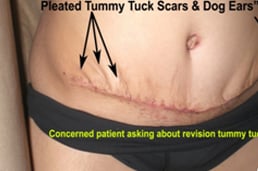
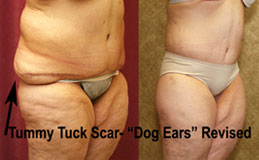
“Dog Ears”. This refers to the pointed skin folds on each side of the tummy tuck scar which stick out from the hips or flanks like “dog ears”. This is caused by not extending the tummy tuck scar far enough on each side. It could also result in scar pleating. To correct tummy tuck dog ear scars and pleating it is necessary to extend the abdominoplasty scar outwards. Although most patients naturally want to limit the length of their tummy tuck scars, actually a minutely lengthened scar will not be as noticeable as a pleated short scar.
Widened or thick scars are often caused by not having adequate suture support at the incision or by having used external sutures. Of course, women who have poor skin elasticity as evident by stretch marks and a history of weight loss, often form widened or bad scars regardless of the type of skin closure.
*Results May Vary
Therefore, I always strive to place my abdominoplasty scars low, have it follow natural skin creases, extend it adequately in order to avoid dog ears, and use plenty of deep dissolvable sutures to support a sturdy skin closure*. Despite all this, there are always going to be some women who form bad scars, keloid, hypertrophic scars, or hyperpigmented scars despite any plastic surgeon’s best intentions*.
Dr. Younai is a Board Certified Plastic surgeon who specializes in body contouring including abdominoplasty and Revision Abdominoplasty. During your plastic surgery consultation he will review your treatment options for tummy tuck and liposuction, including pros and cons of each procedure, costs, potential risks and complications, recovery course, pre and post operative instructions, and esthetic outcomes*.
What happens to the belly button?
*Results May Vary
Does it get moved as the redundant abdominal skin is removed? Is a “new” umbilicus made by the surgeon with an abdominoplasty? An incision is made around the belly button to detach it from the abdominal skin during a tummy tuck procedure. Next, the redundant abdominal skin is pulled down and the excess is removed, along with the hole which represented where the umbilicus was attached to the skin. On the abdominal skin that remains, at the site where the “new” belly bottom is going to be, a new belly button location is marked. How meticulously and artistically the following steps are performed determines how nice the “new” belly button will look. A hole is cored out at this site in the abdominal skin, the belly bottom stalk is brought out, and it is attached or sutured circumferentially to the abdominal skin.
I strive to make the umbilicus small when I perform a tummy tuck, and I place the scars not at the level of the abdominal skin but deeper in the stalk of the umbilicus with an invagination or inward slope, so that it would not be visible*.
An unattractive belly button can be revised or repaired either as part of a tummy tuck revision, or sometimes just by itself.
*Results May Vary
I urge people who are contemplating a tummy tuck to do diligent research and to closely evaluate the before and after tummy tuck pictures of different plastic surgeons. The appearance of the belly button is critical in the post- procedure (after) pictures posted by the plastic surgeons you are considering. It will be hard to hide an ugly belly button once you have had your tummy tuck, especially when you want to show off you new body in a bikini!
(Disclosure: please note the first two examples of tummy tuck scars- “dog ears” are not patients of doctor Younai and they are examples used from the internet public domain without identifying the person)
*Results May Vary
After Pregnancy
Pregnancy changes a woman’s body. No wonder why so many pregnant women want to get a tummy tuck as soon as they deliver! As a Board Certified Plastic Surgeon who specializes in tummy tuck or abdominoplasty I frequently get asked by women if they can regain their old figure after going through pregnancy. The answer is YES*.
The rapid enlargement of the abdomen during pregnancy stretches the skin of the tummy, hips, and thighs. Therefore, it produces stretch marks on the tummy, hip, and thighs. This process also stretches the abdominal muscles and weakens abdominal wall. That is why women cannot regain their original figure despite diet or exercise. No matter how many sit-ups you do the muscles cannot get as tight as before!
How soon?
During pregnancy the uterus enlarges with the growth of the baby. After delivery, either by natural childbirth or c-section, the uterus is still very large. Therefore, it is not possible to effectively tighten the abdominal muscles and remove all of the loose abdominal skin at the time of delivery. Most Plastic Surgeons in Beverly Hills recommend waiting about 3 months after child birth to have a tummy tuck.
Also, you cannot undergo anesthesia and be on medications while you are breast feeding. Therefore, you have to also wait to stop breast feeding prior to having an abdominoplasty.
Most Los Angeles plastic surgeons recommend that you delay getting a tummy tuck until you have reached your pre-pregnancy weight, or at least until your weight has reached a plateau.
Finally, you need to have adequate help to care for your newborn and other children when you are recovering from a tummy tuck for about 2-3 weeks.
Goals
Abdominoplasty tightens the abdominal muscles, removes the excess hanging skin folds and stretch marks; rejuvenates the belly button; and even at times, tones the upper thighs and buttocks*. This is accomplished by the High Tension Abdominoplasty™ – performed by Los Angeles plastic surgeon Dr. Younai. It combines tummy tuck, liposuction, and body lift, to some extent, to give a women’s torso the shape of an hourglass*.
The term “Mommy Makeover” refers to the combination of a tummy tuck with breast augmentation and/or breast lift; in order to reverse the effects of pregnancy on the tummy, while also rejuvenating the breasts. A woman’s breast enlarges with pregnancy, but afterwards it shrinks and actually loses fullness as compared to its pre-pregnancy volume. In addition, the rapid enlargement and then regression of the breasts during this period makes them sag. Most women choose to augment the lost volume of their breasts with a breast implant, as well as to lift them with a Mastopexy after their pregnancy. While tummy tuck and breast lift surgery can be combines safely in most women, the recovery becomes much lengthier. Therefore, if you are considering a Mommy Makeover in Los Angles, please make sure that you have adequate help and support during your 3-4 weeks of recovery.
What to Expect During Your Mommy Makeover
“I had my first daughter at age 15, and two more children after that. I would go shopping with my teenage daughters, and be miserable because I couldn’t buy any clothes for myself. But I wanted to be sure that my family was completed before I had this surgery. My son was three months old when I had a Tummy Tuck, and Liposuction of my hip and abdominal areas at the same time.” — Alicia, age 35
*Results May Vary
According to the American Society of Plastic Surgeons, the mommy makeover procedure is gaining popularity, especially amongst young mothers. The first step in any plastic surgery procedure is a consultation with a board-certified plastic surgeon. Scheduling a consultation with Dr. Younai at his Los Angeles practice can put you on the path to your new, better body*. He can help you assess your goals so that you can decide which areas you want to focus on. Maybe breastfeeding has caused you to lose breast volume, leading you to consider breast augmentation. Perhaps the massive weight loss following pregnancy has left excess skin around the abdomen, a common problem for many mothers who turn to tummy tuck abdominoplasty surgery to regain their youthful figure. Whether you need one of these procedures or all of the above, Dr. Younai can help formulate a plan that will help you look young and feel great*.
Mommy Makeover Recovery Includes
Post-Operative Monitoring: Following most surgeries, you will be kept for monitoring for a few hours.
Special Garments: Surgical bras and compression garments are commonly used to maintain the look of the breasts or stomach after surgery. The length of time these must be worn will depend on the type and extent of the surgery performed.
Pain Medication and Ice Packs: Pain medication may be prescribed to ease discomfort during the initial recovery period. They can also be used in conjunction with ice packs to help reduce swelling.
The timetable for returning to work and other daily activities will vary from patient to patient, but many people are able to resume work within two weeks after surgery*. More strenuous activities should be avoided for at least two months following surgery. Following Dr. Younai’s instructions during your recovery is important to ensuring the best possible results from your surgery*.
Healing
*Results May Vary
You can do gentle walking in two weeks and increase your pace to jogging by 4 weeks. Do not lift anything heavier than a bag of groceries for at least three months. You should not do any sit-ups for at least three months but you can have sex in 3 weeks*! *Results May Vary
Hernia Repair
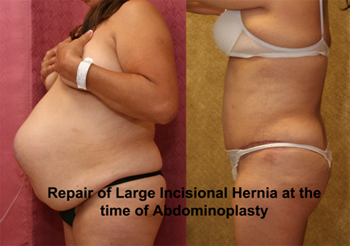
Many Los Angeles women who have to have their abdominal hernias repaired decide to undergo a tummy tuck at the same time. They feel that this is a prime opportunity to rid themselves of their hanging abdominal skin and regain their youthful figure, while having their hernia fixed.
*Results May Vary
Abdominal hernias such as umbilical or inguinal hernias can occur as a result of pregnancy, weight gain, or heavy lifting and straining. Repair of an umbilical hernia at the time of a tummy tuck is rather safe and easy. Inguinal hernias can also be repaired at the time of an abdominoplasty, either through a groin incision or laparoscopically.
Sometimes large incisional hernias occur as a complication of abdominal surgeries such as hysterectomy, tubal ligation, c-section, appendectomy, cholecystectomy, or female surgery. These hernias occur at the site of abdominal wall closure, at the time of the initial surgery. On the other hand, Ventral hernias arise from sites of abdominal wall weakness, and not previous incisions. Ventral hernias are rather prevalent among those who have had massive weight loss with gastric bypass or lap-band surgery.
Simultaneous repair of incisional or ventral hernias at the time of a tummy tuck or abdominoplasty requires skill and experience. All Board Certified Plastic Surgeons have had formal General Surgery training in hernia repair, but not all are necessarily experienced at repairing large hernias.
Scars — The tradeoff for your flatter and tighter abdomen will be surgical scars. While no surgeon, however skilled, can perform surgery without scars, scars do usually fade with time, taking up to 18 months. Some people are genetically predisposed to bad scarring, or even formation of keloids or hypertrophic scars. While it is generally perceived that only dark-skinned people develop Keloids, the fact is that light-skinned people and people from all ethnic backgrounds can develop Keloids, hypertrophic, or “bad scars”. Dr. Younai, and/or his staff review the place of Tummy Tuck or Body Lift scars with every patient prior to surgery, in order to place them in a location that can be better hidden by bathing suits or underwear.
Bleeding — It is possible, though uncommon, to experience some bleeding during or after surgery. Should excessive bleeding occur, it might require a blood transfusion, or even emergency surgery. But most commonly, localized small amounts of blood collected under the skin (hematoma) can be easily treated through aspiration or the placement of a drain. Dr. Younai, like majority of other plastic surgeons, routinely uses drains that help remove any excess fluid or blood collection.
Bleeding — It is possible, though uncommon, to experience some bleeding during or after surgery. Should excessive bleeding occur, it might require a blood transfusion, or even emergency surgery. But most commonly, localized small amounts of blood collected under the skin (hematoma) can be easily treated through aspiration or the placement of a drain. Dr. Younai, like majority of other plastic surgeons, routinely uses drains that help remove any excess fluid or blood collection.
“When I awoke in the Recovery Room, I refused to eat or drink anything. Since I didn’t have anything in my stomach, I couldn’t take a pain pill. I regretted this an hour later when my husband was driving us home on the freeway and the pain hit me hard.” — Nancy, age 40
*Results May Vary
To reduce the chance and risk of bleeding with surgery, you must not take any blood thinners, such as aspirin, anti-inflammatory, or vitamin E for 10 days prior and after your surgery.
Infection — There is a very small chance of developing infection after any surgery. You will be given antibiotics during your surgery and be given a prescription for antibiotics to take after your surgery, in order to reduce the risk of infection.
Pain — While people have varying thresholds for pain, it is an expected result from any surgery. This can be addressed through a prescribed medication from your cosmetic surgeon. Nevertheless, you should be aware that although pain medications do help reduce the degree of pain and make it more tolerable, there is no pain medication that will completely remove pain.
Nausea — Anesthetics, narcotics, and antibiotics do cause nausea. You will be prescribed an anti-nausea medication, both just-before, during, and after your surgery. Taking your medications with food helps to reduce the incidence and degree of post-operative nausea.
Persistent Swelling & Bruising — It is normal for skin of the abdomen, navel, genitalia, buttocks, and thighs to become inflamed, swollen, and bruised following the surgery, and to remain so for some weeks. In rare cases, this can persist for many months or can even be lasting if patient has poor circulation. To minimize swelling and bruising after surgery patients are required to wear a support garment 24 hours a day for three weeks, and then only during the daytime for the following three weeks. Massaging these areas as much as three to four times a day is also very helpful. It is normally expected for the skin to become dry and itchy after surgery. Massaging with heavy lotion and skin moisturizer is essential. You do not need expensive creams to do so – Vaseline, Vitamin E, or any kind of greasy lotion will do. It’s the grease that does the trick! It is good, when possible, to have your spouse or significant other to perform the massage. This helps to accustom a couple to your new look, and to reduce any trepidation that you may both be feeling.
Change in Skin Sensation — The area of abdomen, pubic area, flanks, and parts of the thighs do become numb, after this surgery. This usually resolves gradually over three to eight months, but you can have residual loss of sensation or even hyper-sensitivity in some areas.
Itching, tenderness, or exaggerated responses to hot or cold temperatures may occur after Tummy Tuck, Body Lift, or Thigh Lift, but is usually short-lived and can be alleviated by moisturizing, medication, and massage.
Sutures — Most surgical techniques use deep sutures, which might spontaneously poke through the skin, become visible, or produce irritation that might require removal.
Skin Contour Irregularities — Contour and shape irregularities and depressions may occur after a tummy tuck, body lift, or thigh lift. Residual skin irregularities at the ends of the incision or “dog ears” are always possible as is skin pleating when there is excessive redundant skin. These do usually improve with massage over time, but may require surgical correction.
Fat Necrosis — As your tissues heal after surgery, sometime, some of the deeper skin fat might die. Usually, this is of no consequence, but sometimes it might produce areas of firmness or contour irregularities.
Pubic Distortion — One of the benefits of Tummy tuck and Body Lift is the lifting and flattening of the protruding and sagging pubic skin. Rarely, women develop distortion of their labia and pubic area. Usually, this corrects itself, but sometimes corrective surgery is required.
Asymmetry — Most patients have differences between the right and left sides of their body before any surgery is performed, and surgery might not be able to correct that. Therefore, even after a Tummy Tuck or Body Lift, there may not be perfect symmetry in the body’s appearance. Factors such as skin tone, fatty deposits, skeletal prominence, and muscle tone may contribute to normal asymmetry in body features.
Seroma — Fluid accumulations frequently occur between the skin and the abdominal wall, legs, flanks, back, or buttocks. Dr. Younai, as well as, many other plastic surgeons routinely use drains in these areas in order to remove excess fluid. If you develop seroma, it can easily be drained in the doctor’s office.
Umbilicus — Malposition, scarring, unacceptable appearance or loss of the umbilicus or belly button may occur.
Allergic Reactions- In rare cases, local allergies to tape, suture material and glue, blood products, topical preparations or injected agents have been reported. Serious systemic reactions including shock (anaphylaxis) may occur from drugs used during surgery and prescription medications. Allergic reactions may require additional treatments.
“Blood Clots” (Deep Venous Thrombosis, Cardiac & Pulmonary Complications) — Lengthy procedures may be associated with the formation of, or increase in, blood clots in the veins in the legs while you are immobilized, with the risk that they will travel to other parts of your body, including your lungs. Pulmonary embolism can be life threatening or fatal in some circumstances. You can reduce this risk by moving as soon as possible following your surgery. It is important to discuss with your surgeon any past history of blood clots, swollen legs or the use of estrogen or birth control pills that may contribute to this condition. After surgery, if you experience shortness of breath, chest pain, or an irregular heartbeat, notify your doctor and seek medical attention immediately. Treatment of this complication may require hospitalization and additional treatments.
Damage to Deeper Structures — As with any surgery there is a rare potential for injury to deeper structures including, nerves, blood vessels, muscles, and lungs (pneumothorax). Treatment may require further surgery and hospitalization.
It is wise to have reached an ideal body weight before undergoing a Tummy Tuck. However, we do not live in an “ideal” world. Therefore, you can have your remaining excess abdominal and body fat removed either before, or during, a Tummy Tuck, with Liposuction – provided that you plan to maintain your weight and stay healthy*.
Can a smoker undergo the procedure?
NO. Patients who are currently smoking, use tobacco products, or nicotine products (patch, gum, or nasal spray) are at a greater risk for significant surgical complications. These complications include skin death, delayed healing, and additional scarring. Individuals exposed to second-hand smoking are also at potential risk for similar complications attributable to nicotine exposure. In addition, smoking can have a negative effect on anesthesia and post-anesthesia recovery, with increased coughing and possibly bleeding. Therefore, you need to refrain from smoking at least several weeks before and after your surgery.
Chronic Conditions?
Men and women who have chronic health conditions, such as thyroid disease, diabetes, high blood pressure, and arthritis can still undergo Abdominoplasty – provided that their conditions have been successfully optimized by their physician. Even as a commonly performed cosmetic procedure, a Tummy Tuck is still major surgery, and must be treated as such in all cases. A responsible plastic surgeon will perform blood tests, and take a comprehensive medical history to assure that all risks of surgery are minimized.
Pregnant Again?
Although it is possible to have more children following a Tummy Tuck, another pregnancy could impact your Tummy Tuck outcome, and lead to the need to have your abdomen “re-tightened.” Therefore, a responsible cosmetic surgeon will advise you that it is preferable to be satisfied with the size of your family before undergoing a Tummy Tuck.
Remove Stretch Marks?
There are no creams, or laser treatments that can erase stretch marks. However, because an Abdominoplasty removes most of the stretched out skin below the level of the navel, it does get rid of most of your stretch marks — at least those on the abdomen.
Differ From Liposuction?
One of the most common dilemmas for patients who are concerned with their abdomen is whether they would be better served with a Tummy Tuck or Liposuction.
While a Tummy Tuck or abdominoplasty is designed to remove loose abdominal skin and to tighten the belly, Liposuction is designed only to remove excess fat*. A Tummy Tuck or Abdominoplasty will not reduce the dress size in a woman of size 14 who has much fat around her abdomen. Likewise, a woman who has lost all her excess weight after pregnancy and is left with loose, hanging abdominal skin will not be able to tighten her abdomen or remove the stretch marks with Liposuction.
There are some people who are “in-between” these two groups – who have both excess fat and a hanging “spare tire.” These people will first need to undergo Liposuction to rid themselves of the fat*. They will then need a Tummy Tuck to remove the excess skin and to tighten their abdominal muscles*.
Simultaneous Tummy Tuck and Liposuction?
Yes and No. It is not safe to perform Liposuction in the areas of the abdomen where the skin is being stretched during an Abdominoplasty. This can cause unnecessary damage to the blood circulation of these areas, resulting in scarring or even skin loss. As long as Liposuction is performed away from the main abdominal skin areas, it is then safe. Therefore, some people choose to have their hips and thighs liposuctioned in conjunction with an Abdominoplasty. Breast lifts and augmentation are also frequently combined with the Tummy Tuck or Abdominoplasty. The surgeon may also simultaneously perform facial rejuvenation procedures, such as eyelid surgery, or procedures to remove fine wrinkles from the face*. Because the total length of combined surgeries can affect the overall surgical risks, you should thoroughly discuss the safety of combined procedures with your cosmetic surgeon.
Difference Between Abdominoplasty and Panniculectomy?
Panniculectomy is similar to Abdominoplasty in that it removes excessive abdominal skin. More specifically, Panniculectomy is designed for those with an extremely large hanging pannus or “spare tire”. On the other hand, Tummy Tuck is for those who having excess loose skin, but not a spare tire.
Unlike a Tummy Tuck, Panniculectomy does not tighten the abdominal wall, narrow the waistline, or tighten the upper thighs. Panniculectomy only removes the “spare tire”*.
Difference Between Abdominoplasty and Body Lift?
Tummy Tuck only corrects the looseness and redundancy of the abdomen*. Body Lift combines a Tummy Tuck with the lifting and tightening of the redundant back skin folds, the sagging buttocks and the outer thighs*.
Therefore, a Body Lift is a more extensive procedure, with the goal of lifting and tightening the entire lower body. Most people with loose abdominal skin or even with some sagging of the buttocks can be treated with an extended Tummy Tuck or a High Tension Tummy Tuck*. For those who, as a result of massive weight loss, develop an abundance of lower body skin excess with sagging of the buttocks and outer thighs are better served with a Body Lift*.
Body Lift incision Larger than Abdominoplasty?
The incision of a body lift extends farther than the incision for Abdominoplasty – past the hips to the back, like a belt. Because of this some people call a Body Lift a “Belt Lipectomy.” A Belt Lipectomy, however, does not lift the buttock and only removes excess skin folds*. *Results May Vary
Thigh Lift?
After weight loss, men and women can get sagging and rippling of their thighs that can extend from the upper thighs to the knees. Often, women complain that they are unable to wear swimsuits and that the loose skin rubs together between their thighs. Also, the wrinkled loose skin around the knees keeps many women from being able to wear skirts.
While the sagging of the outer thighs and the buttocks can usually be addressed with a Body Lift procedure that of the inner thighs cannot*. A Thigh Lift is a procedure which lifts and tightens the loose skin of thighs — mostly that of the inner thighs*.
What is a Traditional Thigh Lift?
Two different types of thigh lifts can be performed depending on the extent of skin laxity. If the skin laxity and rippling is mostly limited to the upper inner thighs, and skin excess does not extend to the entire circumference of the thigh, a Traditional Thigh Lift can be performed. In this procedure the surgical scar is located in the groin crease extending to the buttock crease. This scar is very well hidden.
What is an Extended Thigh Lift?
Often, people who were once extremely obese are now left with extensive laxity of the entire thigh all the way to the knees. In these cases, an Extended Thigh Lift is performed. In addition to the scar of the groin crease, there is also a long vertical scar that extends along the inner thigh height. This vertical scar enables the surgeon to remove the lax excessive skin of the entire thigh.
Can Thigh Lifts be Combined with Liposuction?
Yes. Both Traditional Thigh Lift and Extended Thigh Lift can often be combined with limited Liposuction in order to better contour the legs and to reduce the size of the “saddle bags”.
“Tummy Tuck,” also known as Abdominoplasty, is a cosmetic surgery procedure designed to remove loose hanging abdominal skin, as well as to tighten weakened abdominal wall muscles*. Because diet and exercise cannot fix these problems, over 80,000 American men and women undergo Tummy Tuck or Abdominoplasty every year, in order to regain their figure and abdominal strength*.
Can I get my Figure Back Following Pregnancy?
Tummy tuck or Abdominoplasty re-establishes the strength and integrity of the abdominal wall by repairing the separation and stretching of the two “Rectus” muscles*. These muscles (the ones used for “sit ups”) are the two major abdominal wall muscles that are normally held together over the front of the abdomen in order to give it its strength and tightness.
Abdominoplasty also removes the loose stretched-out skin (with stretch marks) of the lower tummy, as well as rejuvenating the stretched-out belly button or “umbilicus*.”
What is a Mini-Tummy Tuck?
A Mini Tummy Tuck or Mini-Abdominoplasty is not as extensive as a Tummy Tuck or Abdominoplasty, requiring only one hour of surgery as opposed to the three to four hours needed for a Tummy Tuck. Since it does not usually involve tightening of the abdominal muscles, it is reserved only for those who only have limited amount of loose skin or stretch marks in the lower abdomen or above the pubic bone. Also, it does not alter the shape of the belly button. A Mini-Tummy Tuck does not involve an extensive undermining and tightening of the abdominal skin, so it can be safely combined with full Liposuction of the abdomen and flank*. Therefore, the combination of Mini-Tummy Tuck with Liposuction might be a better choice for those with excessive fat, but limited looseness of the abdomen*.
While the incisions for a “full” Tummy Tuck can extend from hipbone to hipbone, those of a Mini-Tummy Tuck are much shorter, usually extending only the width of the pubic area and similar to a C-section scar*.