


Facelift (Rhytidectomy)
Consultations offered at our three convenient locations in Encino, Glendale and Bakersfield
The facelift is maybe the best-known plastic surgery procedure, and for good reason. Used alone, or in conjunction with a neck lift, a facelift can create an almost miraculous transformation. Over the years, these procedures have been refined to produce stunning, yet natural-looking, results.
A facelift and/or neck lift is used to smooth the lower third of the face and neck. These parts of the face tend to age quickly, and can make you look much older than you are. Many people seek these procedures because they want:
- A smoother, more defined neck
- Eliminate jowls and a strong jaw line
- Diminished smile lines
- Smooth cheeks
- An overall more youthful appearance
There are several techniques that can be used, depending on your current appearance and your overall goals. Dr. Younai will review your options with you during your consultation.
Contents
The Procedure
Are you tired of looking tired, while to the contrary, you feel energetic and young? When you look in the mirror, do you see yourself, or an older person? Do your coworkers or friends say that you are just getting too old to be doing what you do?

Youth is an internal entity, and not an external one. Unfortunately, at times our external facial appearance doesn’t match our internal clock. The goal of a Rhytidectomy or a facelift is to set back our external clock to match the youthfulness that we feel inside!
Rhytidectomy or a Facelift rejuvenates the neck, jaws, cheeks, eyes, and the forehead. A facelift re-drapes the facial skin, tightens muscles, and reverse the effects of gravity, aging, and loss of facial fullness or volume. This gives you a firm neck and cheeks, with well-defined jaw lines, and smoother skin.
The word Rhytidectomy comes from the Greek word “rhytis,” which means “wrinkle,” and “ektome,” which means excision. It actually refers to a group of procedures from the cheeks down to the neck which, in the hands of a skilled plastic surgeon won’t make you look “different” as much as they’ll make you appear more relaxed, rested and rejuvenated.
My inner life is important to me, but it’s not the only thing. I love stylish clothes, good makeup, perfume and hair color. To me, my appearance is part of who I am, and I want my looks to match the way that I feel.” — Norma, age 47
Thousands of American men and women undergo facelift every year. It is the second most common cosmetic surgery procedure performed among mature men and women – following Blepharoplasty/Eyelid Surgery. In fact, almost always a facelift is combined with other Facial Plastic Surgery procedures such as eyelid tuck or blepharoplasty, forehead or brow lift, cheek or chin implants, rhinoplasty or nose job, neck liposuction, and chemical peel, dermabrasion or laser resurfacing.
Candidates for Rhytidectomy/Face Lift include men and women with one or more of the following: deep lines that run from the corner of their nose to the corner of their mouth, also known as nasolabial folds; the loss of a well-defined jaw or the development of “jowls;” sagging of the “highlight” areas of the cheekbones and deep wrinkles in the cheeks; loose skin, wrinkles, vertical “cords” or excess fatty tissue in the neck.
Most facelift patients are between 40 and 60 years of age. However, Rhytidectomy is successfully performed on people in their seventies and eighties as well. Many plastic surgeons consider the ideal candidate to be a middle-aged woman, with a strong underlying bone structure and a minimal amount of fatty tissue. In addition to those who have strong bone structure, the best facelift candidates are men and women whose face and neck shows signs of sagging, but whose skin is still elastic.
Techniques
There is not just one facelift procedure. In fact, there are a number of facelift procedures that can rejuvenate your face from your cheeks down to your neck.
Areas Of Focus
- Nasolabial Folds: These are the deep lines that run from the corners of the nose to the corners of the mouth.
- Jowls: Loss of elasticity in the skin can cause a loss of definition and sagging in the jaw region.
- Deep Wrinkles: These can appear anywhere on the face, but are especially prevalent on the cheeks. They can obscure the appearance of the cheekbones as well.
- Cords: These appear on the neck due to a combination of sagging skin and excess fatty tissue.
A facelift can address all of these issues, removing excess skin and turning the clock back on your face in the process. New advances in facelift procedures focus on restoring the youthful, natural appearance of your face without the tight, overdone look that was the hallmark of older facelift procedures. The extent of the facelift will vary according to each patient’s individual needs, with some requiring more invasive tissue manipulation in order to achieve the desired look. In addition, facelifts are typically combined with other facial procedures in one surgery.
Combined Procedures
- Eyelid Surgery (Blepharoplasty)
- Forehead/Brow Lift
- Cheek/Chin Implants
- Nose Surgery (Rhinoplasty)
- Neck Liposuction
- Non-Surgical Skin Resurfacing
No matter what procedures you combine with your facelift, the overall effect can help you look younger and feel more confident.
During Rhytidectomy, the cosmetic plastic surgeon uses a scalpel or a laser to make an incision at your hairline, above and in front of your ear, in the temporal region. The incision is then extended downward in front of the ear, ending in the hairline behind the ear.
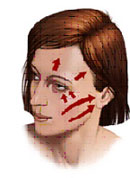
The facial plastic surgeon then lifts skin and fatty tissues off of the underlying muscle and connective tissue, moving it as far forward as is needed to correct the looseness of your skin. If necessary, the plastic surgeon will then tighten the underlying muscle and connective tissues with sutures. Your skin is then draped back and upwards, and the excess skin is removed. As a rule, facelift and Neck Lift are performed as a single procedure, elevating both the skin and soft tissues of the face and neck, and returning them to their original location. Besides tightening the loose neck skin (Cervicoplasty), the neck muscles are also tightened through a small incision under the chin by a technique called “Corset Platysmaplasty
After trimming excess skin, your plastic surgeon closes the incisions with fine sutures and/or metal clips, which permit surgery to take place without shaving hair from the incision site. Some plastic surgeons leave a drain in the wounds to remove excess blood and bandages are then applied.
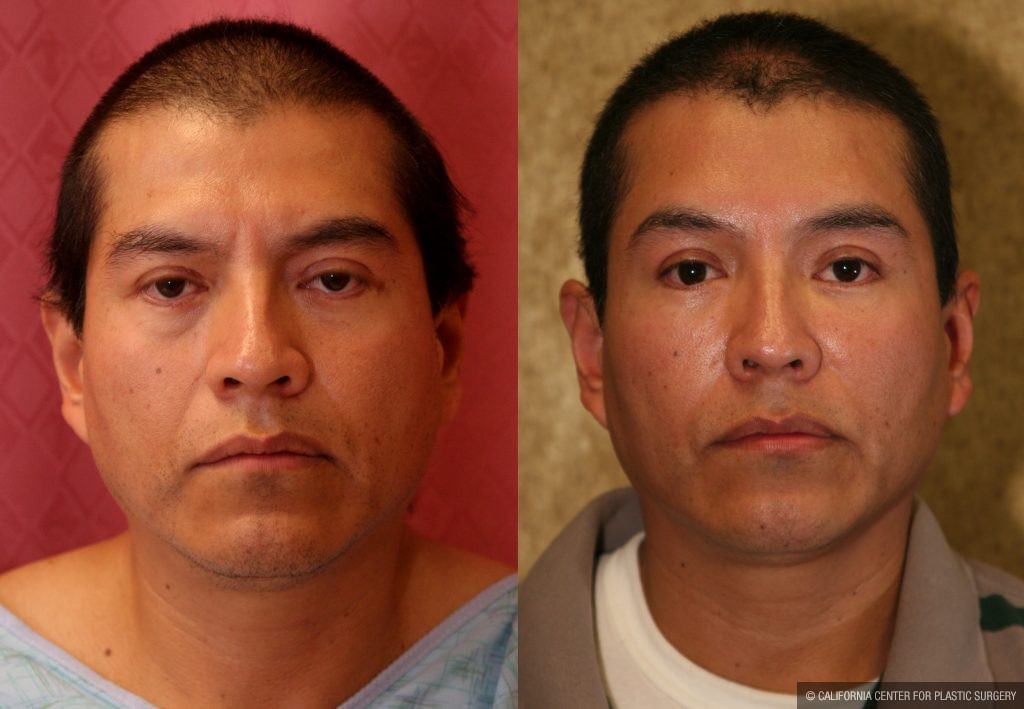
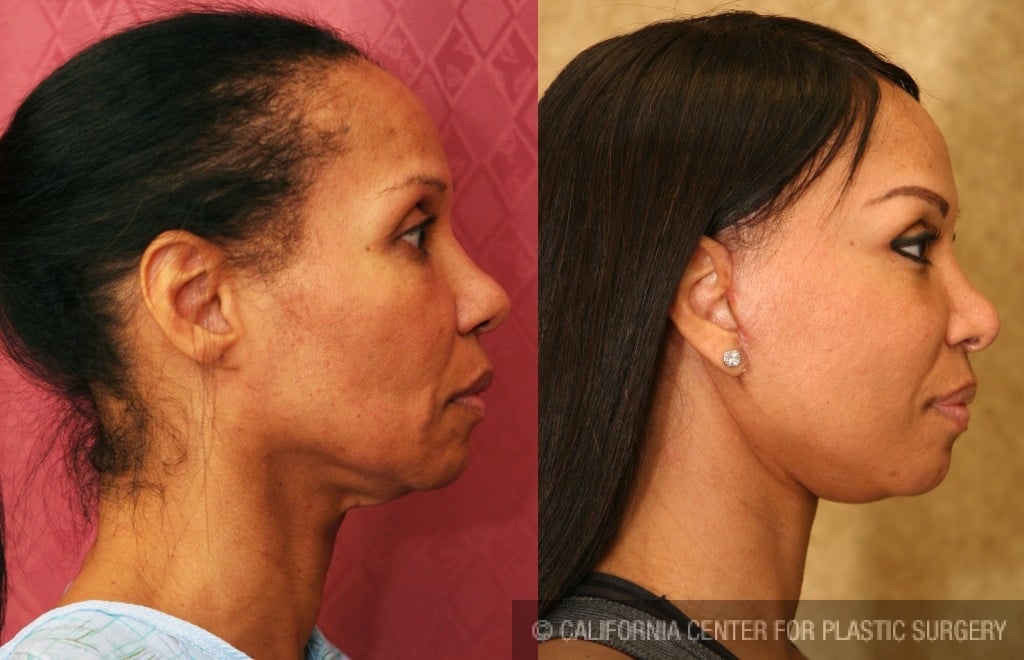
The goal of a facelift is to give you a younger looking face that is natural-looking and not overdone. Dr. Younai is a Board Certified Plastic & Reconstructive Surgeon with experience in all aspects of Facial Cosmetic Surgery including facelift or Rhytidectomy, eyelid surgery or blepharoplasty, neck lift, forehead or brow lift, rhinoplasty, etc. He is skilled and experienced in all techniques of facial rejuvenation surgery and strives to create a face that is natural and normal looking. During your consultation he will discuss all details including: if you are a good candidate, surgical options and techniques, potential risks and complications of surgery, pre- and post-operative instructions, recovery course, as well as what to expect after surgery. At that time Dr. Younai will also show you before-and-after pictures of other patients with facelifts, who might be similar to you.
Before and After Photos


Surgical Techniques
Traditionally, your plastic surgeon makes an incision within the hairline and within natural contours in front of and behind the ear. The incision starts in the temporal area, extends in a natural line just inside the cartilage at the front of your ear (Tragus), then behind the earlobe to the top of the ear, and then finally down the hairline along the posterior scalp. The relationship of these incisions with respect to the hairline might vary among women depending on their hairstyle, and among men depending on the extent of balding and the location of the receding hairline. Besides this incision, another one is also made under the chin fold to access the neck muscles.
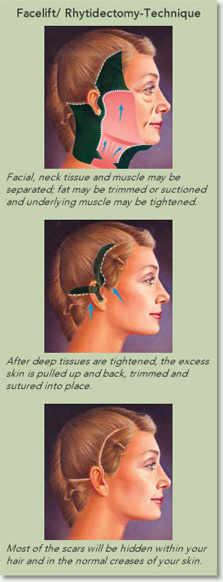
First, the neck is contoured by removing the excess fat and by tightening the neck muscle (Platysma) in a corset-like fashion. Therefore, this technique is called a “corset Platysmaplasty”. It is one of the most important parts of the Facelift, in that it creates the sharp angle under the chin, thus removing the neck bands and the “Turkey Gobbler”. At times the sagging salivary glands that hang below the level of the jaw line and make the neck look fuller and less defined, are also repositioned back to their original location.
Second, the skin of the face is partially lifted off from the sides via the incisions described above. At this point, it is curtailed to tighten and elevate the sagging underlying structures including the cheek fat pad (SOOF), Superficial Musculo Aponeurotic System (SMAS), and the outer neck muscles. These structures are re-suspended by sutures, barbed surgical strings (“Contour Threads”), or absorbable hooks.
Third, the facial skin is re-draped, and its excess removed. Drains are placed in the depth of the tissue in order to remove excess fluid build-up. Incisions are carefully closed with deep and superficial dissolvable sutures.
Attention is then directed to the rejuvenation of the eyes by performing a lower and upper Blepharoplasty (Eyelid Surgery), if needed. A Forehead Lift is at times combined with a facelift, in order to rejuvenate the forehead, lessen the frowns, and to lift sagging eyebrows, thus also being called a Brow-Lift.
At times when there is loss of facial volume and fullness as a result of aging, the cheeks, chin, or lips are also augmented with implants, fat grafts, or other fillers before closure of the skin.
Finally soft protective bandages are placed around the neck, ears, and the face.
Types
Depending on the patient’s needs, and the plastic surgeon’s preference, the Facelift surgery is varied to different degrees.
Mini-Facelift
A Mini-Facelift is similar to a full Facelift, with the exception of not including the Neck Lift. This procedure is usually reserved for those who have deep Nasolabial Folds, jowls, and sagging facial structures, yet still have a firm and well- contoured neck. The extent of deep tissue tightening is usually not as detailed as a full Facelift. This procedure can also be combined with other procedures such as Eyelid Surgery, Blepharoplasty, Forehead Lift, and skin resurfacing.
SMAS Facelift
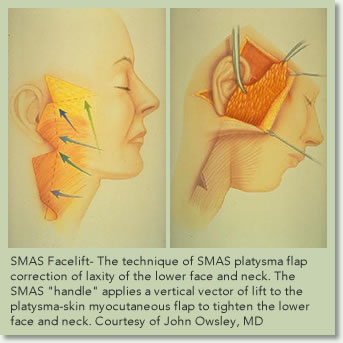
The Superficial Musculo Aponeurotic System (SMAS) is an anatomical layer of thickened deep tissue and suspensory ligaments that encase the cheek fat pads and facial muscles and holds them in their normal position. With aging and gravity, the cheek and the subcutaneous structures descend. Resuspension of these tissues by elevating and securing the SMAS is an integral part of a good facelift that lasts. This technique has been modified by a variety of surgeons to include different layers of the deep facial structures leading to the development of “Composite Facelift” and multiple plane Facelift.
Deep Plane Facelift
In the pursuit of a superior correction of the deep Nasolabial Folds and to better elevate the deep tissues of the face and the cheeks, the Deep Plane Facelift was developed. This technique is similar to the SMAS facelift with the exception that the cheek fat pads and some of the facial muscles are freed off the facial bones in order to be able to mobilize them better. This procedure is technically more challenging than the traditional facelift and also carries a higher risk of facial nerve injury, and should be performed only by a plastic surgeon who is very experienced in it.
Subperiosteal Facelift
In the Subperiosteal Facelift, the deep facial structures are completely separated from the underlying facial bones and elevated to a more normal position. Like the Deep Plane Facelift, this procedure also achieves a better correction of the deep Nasolabial Folds and the sagging cheeks. The disadvantage of this technique is that it carries a longer period of facial swelling afterwards.
Cheek Lift
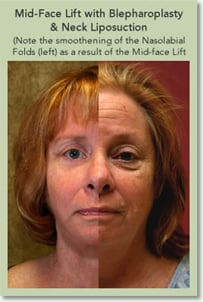
In some circumstances, mostly in the younger patients, the facial sagging is predominantly limited to the mid-face — the area between the two cheeks. In these people the Nasolabial folds are deep, the cheeks are sagging, yet there is not a significant degree of jowling or sagging of the neck. In these people, a Mid-Facelift rejuvenates the face, without the need to undergo a more drastic surgery such as a full Facelift. The incisions are rather small and are placed either in the mouth or through the lower eyelid incisions that are usually used for lower Blepharoplasty. The results are rather dramatic and the recovery rather short. It is often combined with Eyelid Surgery — Blepharoplasty.
Skin-Only
The Skin-only Facelift does only lift and pull the facial skin and does not tighten the underlying facial ligaments, muscles, or structures. Because of the poor elasticity and laxity of the aging facial skin, the pulled facial skin usually re-sags within six to twelve months; making the longevity of this Facelift rather short. The primary reason that this procedure is performed is that it is not as technically demanding and time consuming as the SMAS Facelift.
Neck Lift with Corset Platysmaplasty
This is another term for the tightening of the neck muscles. After a small incision is made beneath the chin, your plastic surgeon removes fat that has collected in the neck or jowl area with Liposuction. After the fat is removed, the cosmetic surgeon tightens the muscles of the neck. This procedure eliminates a double chin and it will also remove any vertical bands that have formed in the neck. The improvement in the neck helps to achieve the rejuvenation of the entire face.
S-Facelift
In patients whose facial aging is focused in the neck with no evidence of jowling, the neck skin can be tightened and pulled back towards the earlobes. The remaining excess skin is removed through an S-shaped incision that travels from the front of the earlobe, to behind the ear, and along the hairline of the lower scalp. At times this procedure is combined with a Corset Platysmaplasty to further tighten the neck muscles and in order to eliminate the neck bands or cords.
ThreadLift™
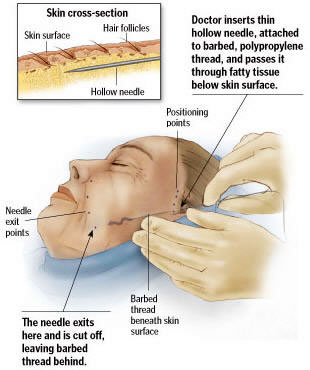
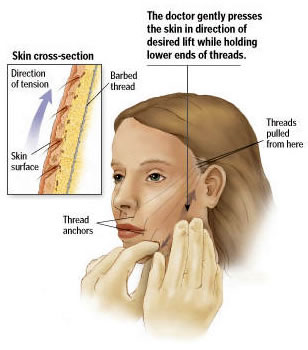
When facial aging is minimal, the facial skin can be lifted and tightened with the aid of Contour ThreadLift™ sutures. These sutures are non-absorbable Polypropylene barbed sutures that are threaded under the skin through small stab incisions behind the hairlines. The subcutaneous tissue is then loosened away from the deeper structures and then advanced over these sutures to a more elevated position. The advantage of this technique is that it is “minimally invasive” and can be performed without general anesthesia, and with very little down time. Because it is a rather new technique, its drawbacks and limitations have not been fully tested. In my experience, it can achieve rather dramatic results, as long as there is not much redundant facial skin. If there is much redundant skin, this excess skin must be excised as in a standard Facelift or it will gather in bunches on the sides of the face. Furthermore, the sutures can also fail their pulling capacity, be visible or palpable from under the skin, or even extrude through the skin. In case of extrusion, they can be very easily pulled out and trimmed. More so than other surgical procedure, the Thread Facelift technique’s success is very dependent on the skills of the plastic surgeon and his/ her ability to direct the vector of the facial pull in a direction that will give a natural result while still making a difference.
Length of Procedure
The duration of a Facelift is obviously relative to its complexity and the techniques used. Since other procedures such as Blepharoplasty and Forehead Lift are commonly performed along with a Facelift, the length of the entire procedure can take from four to seven hours. Your plastic surgeon should thoroughly discuss with you the extent of surgeries that can be safely performed at once.
Candidates
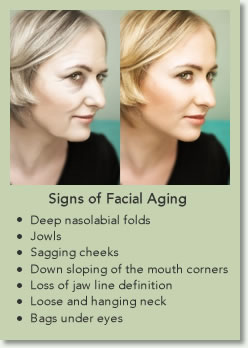
The stress of everyday life, sun damage, genetic factors, and gravity – these all contribute to the changes we see in our face as we age. As the years go by, the skin of our face and neck wrinkles, relaxes and loses its elasticity and volume. Crow’s feet appear at the corner of the eyes and forehead lines turn into deep folds. The cheeks descend, deepening the Nasolabial Folds, forming jowls and distorting the jaw line. The neck skin wrinkles, and neck muscles becomes lax.
Rhytidectomy, or a Facelift, can help “set the clock back” a number of years by tightening underlying facial and neck muscles, elevating the sagging structures, re-draping the facial skin, and removing its excess skin. In the hands of a skilled plastic surgeon, you can once again look as good as you feel. Rhytidectomy or Facelift actually refers to a group of procedures designed to treat the aging face and neck. These procedures won’t make you look “different” as much as they’ll reverse the aging process to make you look more refreshed and rejuvenated.
Contrary to the popular belief, a Facelift does not just revive the face, but it also restores the contour and tightness of the neck.
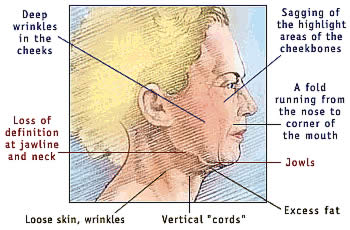
Men and women who are considering Rhytidectomy or Facelift surgery are troubled by a variety of their aging facial features such as:
Nasolabial Folds — the deep lines or folds that run from the corner of the nose to the corner of the mouth.
Loss of a well-defined jaw line or the development of “jowls”.
Sagging of the “highlight” areas of the cheekbones and deep wrinkles in the cheeks.
Loose hanging skin folds, wrinkles, vertical “cords” or excess fatty tissue in the neck, also known as “turkey neck”.
The factors that contribute to a successful Facelift outcome vary between individuals. Your skin type and elasticity, the degree of sun damage, whether you are a smoker will all have an impact on the outcome of your surgery.
Many plastic surgeons consider the ideal candidate to be a non-smoking middle-aged woman, with a strong underlying bone structure and a minimal amount of fatty tissue. Likewise, those who are very overweight, who suffer from chronic sun damage and who have very thick or very thin skin are less likely to have an optimal result.
In addition to those who have strong bone structure, the best Facelift candidates are men and women whose face and neck show signs of sagging, but whose skin is still elastic. Because of this, it is not wise to wait until your early sixties to have your Facelift. By that time you would have lost more skin elasticity as well as facial volume, which makes it more difficult to achieve an optimal and lasting result. Therefore, most men and women elect to have Facelift surgery in their late forties and up to late fifties. However Rhytidectomies are still successfully performed on people in their seventies and eighties as well.
There is a trend to pursue a more proactive approach to Facial Rejuvenation by having less dramatic procedures performed at an earlier age, from the late thirties to early forties, to maintain a youthful appearance. These procedures include Mid-Facelift, Mini-Facelift, Thread-Lift, Temporal Lift, and endoscopic Forehead Lift. Meanwhile, people are also taking better care of their skin by using sun blocks, avoiding facial tanning, and using laser as well as other modes of skin resurfacing and tightening.
Men and women who are active smokers, are on major blood thinners, and have serious medical conditions that are not under control should not have Facelift. Since Facelift is a major surgery that would have lasting results on the way others perceive you, you should be at a stable stage in your life when you feel very secure and psychologically balanced before pursuing such endeavor. And finally, you should have spent ample time considering your options and have a realistic sense of what can be possibly achieved with a Facelift, in your particular case.
The goal of a facelift is to give you a younger looking face that is natural-looking and not overdone. Dr. Younai is a Board Certified Plastic & Reconstructive Surgeon with experience in all aspects of Facial Cosmetic Surgery including Facelift or Rhytidectomy, eyelid surgery or blepharoplasty, neck lift, forehead or brow lift, rhinoplasty, etc. He is skilled and experienced in all techniques of facial rejuvenation surgery and strives to create a face that is natural and normal looking. During your consultation he will discuss all details including: if you are a good candidate, surgical options and techniques, potential risks and complications of surgery, pre- and post-operative instructions, recovery course, as well as what to expect after surgery. At that time Dr. Younai will also show you before-and-after pictures of other patients with facelifts, who might be similar to you.
Preparation

- Approximately one to two weeks before your surgery you will undergo a general pre-operative evaluation at our office, at which time you will also undergo blood testing and EKG if necessary.
- At that time you need to review with our staff all your medical conditions even though they might not appear to be of importance to you. The review of your eye and vision health is also crucial. We would like to know if you had previously undergone any facial surgery, eye or eyelid surgery, whether you take any eye drops or medications for your eyes or vision, and whether you suffer from dry eye. Have you ever suffered from Facial Palsy or any type of facial paralysis, trauma, or stroke?

- After reviewing the procedure and answering your questions, we will give you written instructions of the medications, vitamins, or herbs to avoid for at least two weeks prior and after your surgery. These include over the counter medications or vitamins that might thin your blood and cause you to bleed excessively during and after surgery.
- If you smoke, we absolutely require that you don’t smoke for two weeks prior to, and four weeks after surgery, because this can significantly jeopardize your Facelift surgery.
- You will be provided with prescriptions for pain medications, antibiotics, lubricating eye drops, anti-inflammatory eye drops, and nausea medications. Please have these ready in advance.
- Get your house in order so that after surgery you wouldn’t be bothered with doing demanding house chores.
- Have bags of frozen peas or cold compresses ready in your freezer for use after surgery.
- Have your bed area prepared with many pillows or cushions to be used for propping you up. Elevation of the head after surgery reduces swelling and pain.
- Arrange for adequate support for the care of your children and pets for at least the first two to three days after surgery.
- You would not be able to wear contact lenses after surgery, therefore, have corrective glasses available.
- Have someone reliable, preferably a family member or close friend bring you to surgery and from surgery. This person should be available to stay and assist you the night after surgery. If you don’t have such a person, please let us know in advance so that we can recommend several available after-care facilities or caretakers to you.
- Have loose and comfortable clothes and shoes available to wear the day of surgery. Also if you have dark sunglasses, they will help reduce the sun glare in your eyes after surgery.
- You cannot drink or eat anything except your medications for eight hours prior to surgery.
- Don’t drink any alcohol for one week prior to and after your surgery.
- Do not wear any makeup, facial lotions, or perfume the day of surgery. Shower and shampoo the morning of surgery, remove all eyelid and eyebrow cosmetics, and don’t apply any hair gel or grease.
- Bring all your medications with you to surgery.
- Don’t wear jewelry, necklaces, tongue rings or body piercing, wristwatches, hairpieces, false eyelashes, or contact lenses to surgery.
Recovery
The results of your facelift and neck lift should last for many years to come. Although no cosmetic surgical procedure can yet promise permanent results, most patients enjoy their new younger appearance for years. If you like, you can maintain your appearance through minor touchup procedures down the road.
Patients who seek a facelift or neck lift earlier in life generally have fewer issues with things like skin laxity down the road. In other words, seeking one of these procedures in your 40s usually requires less work and has a more lasting effect as you get older. However, no matter when you have a facelift or neck lift, your face will continue to age.
Dr. Younai has a deep understanding of facial anatomy and an artist’s sensibilities when it comes to beauty. He takes special care to preserve your natural beauty, even as he helps take years off your face. After all, you still want people to recognize the new, more youthful you.

Facelift and other major Facial Surgeries are usually performed under light general anesthesia. Most people don’t remember their experience in the operating room because of the amnesia effects of the sedatives.
After your surgery, you will spend some time in the Recovery Room of the surgical facility.
- When you wake up, you will have a cold compress gauze dressing over your eyes. Don’t be alarmed if your eyes are covered and you cannot see. There is always a nurse available to assist you. Just ask for anything you need!
- Your face and neck will feel very tight and swollen due to surgery. Your neck and face will be wrapped in soft bandages that at times might make you feel confined. Some patients perceive this as choking or not being able to breathe. As long as you can talk you can breathe; therefore don’t get overly anxious!
- Your vision will also be blurry for one to two days after surgery because of the medications that were placed on your eyes, as well as, eyelid swelling.
- Don’t panic even if your eyes are closed shut the day after surgery. This might be caused by swelling and or bruising. As long as you have some vision, there is no cause for alarm.
- Wear your dark sunglasses or keep your eyes covered on the way home to avoid bright sun irritation.
- Once you go home, make yourself comfortable in a couch or a bed, with your back up, and your head elevated. Start using, the cold packs over your eyes right away and continue at least for the first 48 hours.
- You can drink liquids and most types of foods as long as they are not too spicy or greasy.
- We encourage you to walk a bit at home and to not be sedentary.
- Continue to take your usual prescription medications, except those that we have specifically instructed against.
- You can slightly loosen up your neck and facial dressings but you cannot remove them until you return to doctor’s office.
Dos and Don’ts

- After surgery, the best position for the first 2-3 days is to be lying semi-reclined. Elevation of the upper body and head reduces the swelling and aching of the eyes and face.
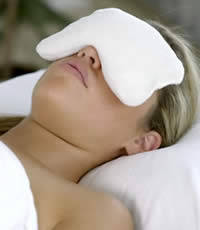
- The application of cold packs, wet compresses, or frozen peas over your eyes are of the most benefit, especially during the first two days.
- DO NOT put ice or very cold compresses directly on your face, because it can cause frostbite and even loss of facial skin.
- Take your pain medications routinely because any increase in pain can increase your blood pressure and cause more swelling, bruising, and prolonged healing.
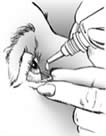
- Routinely, use the lubricating eye drops to keep your eyes moist, and use other prescribed drops and medications as directed.
- Gentle outward massage and blinking can also help to rid you of the swelling.
- It is very common not to be able to completely close your eyes for weeks after double eyelid surgery. To protect your eyes during sleep, cover them with a moist clean cloth and/or apply lubricating eye ointment (Lacrilube, Duolube).
- Although it is good to gently and sparingly apply some Vaseline on your eyelids to keep them moist, DO NOT use Neosporin or other antibiotic ointments or lotions because they can burn your eyes.
- If you just had eyelid surgery, you may get your face and the stitches wet in the shower the next day. Otherwise, if you have bandages around your face or head, don’t get them wet, but you may carefully wash your face.
“The first day after surgery, my mouth felt sandy, and my face was numb. I was not in pain, but I did feel hot and confined.” — Jane, age 46
- I encourage you to be mobile and to not be sedentary in order to reduce the chance of forming blood clots in your legs.
- Some people develop back pain or muscle spasm as a result of sleeping propped up. If you experience this, put a heating pack on your back and have a family member massage your back.
- Take your nausea medications about one hour before taking your antibiotics and pain medication in order to lessen the extent of nausea.
- Do NOT take any aspirin-like products, diet pills, or vitamins until after approved by your doctor.
- It is good to stay well hydrated, but avoid drinking too much plain water because it can make you more nauseated.
- Avoid eating greasy or spicy foods for the first three days, and have antacids available if you get an upset stomach.
- NO smoking for at least four weeks after surgery, because smoking can have devastating effects on your facial wounds.
- Do Not wear contact lenses for about two weeks or until your surgeon has approved them.
- Recovery varies for each patient, as will the timing for resuming exercise and normal physical activities. Although you will probably be able to return to work within a two weeks, your cosmetic surgeon will instruct you to avoid heavy physical exertion, including heavy lifting, frequent bending, reaching high over shoulder, and jogging for the first two weeks. Also, excessive reading or prolonged driving can tire your eyes during the first 6 weeks after surgery.
- While most of the swelling will go away during the first two months, there could be some residual swelling and inflammation for up to one year after surgery depending on the extent of surgery and the way your body heals.
- Try to wear sunglasses when driving or in sunny areas to protect your eyes from the bright sun irritation.
- You can have sex after two weeks, as long as you don’t overly exert yourself, and keep your incision clean for up to 3-4 weeks.
- You cannot use a public pool, Jacuzzi, or go into the ocean for at least 4 weeks after surgery.
- Small whitehead-like cysts called Milia can develop on the eyelid skin or the incisions. These are harmless and can be easily removed if they persist.
- Eyelid surgery does not affect your permanent makeup. If you are planning to have permanent makeup after surgery you should wait for six weeks to avoid running or smudging of the permanent makeup.
- Your eyelid sutures will usually be removed in about 5-6 days after surgery. Your scalp sutures will be removed in two weeks, while the drains will be removed in about 2 days.
- You can wear camouflage makeup and concealer after your sutures are removed, and as long as you don’t get them in your eyes.
- During your first several week after your surgery if you have any important questions or concerns, please feel free to contact my office, at any time of the day or night
Tips for Your Significant Others
The support of your family and loved ones can be as important to your healing as following your physician’s medical directives. Their understanding of the pain, discomfort, and at times, the roller coaster of emotions, that you might experience can make all the difference in having an optimal outcome.
Here are some tips for your significant others that will be helpful to them in helping you:
- You should be available as a full time caregiver for at least 48 hours to help the patients with the tasks that are normally taken for granted, like being able to walk to the bathroom.
- You, or someone, should care for the patient’s children for a minimum of one week, and be sure that she has assistance in lifting young children for several days after your surgery.
- Help with pet care. Someone should walk them, feed them and clean up after them for at least several days. Make sure that pets don’t come into contact with any facial wounds because they can cause severe infection.
- Prepare to help the patient address the swelling that she will experience, according to her physician’s instructions. This may include ice packs or cold compresses specifically designed for eyelid and facial surgery.
- Know that he or she may experience mood swings and feel like crying off and on – especially in the first couple of weeks. This is a normal aftermath of major surgery.
- Encourage him or her to drink lots of water – to address bloating and to keep her hydrated.
- Remind the patient to not fight the pain – to go with the flow, and take her medications as directed. It is not good to try and be a hero!
- Give lots of compliments. She may be fearful because it will take some time before her eyes and face appear as they should. She has a lot of healing to do!
- Prepare simple and easily digestible foods, such as scrambled eggs or Jello.
- Remind her to sleep on her back for the first week!
- Be there when she goes to have her bandages removed, to support her through any discomfort she may be feeling.
- As far as sex is concerned, let the patient take the initiative.
- Some patients feel scared that they might harm their face if it is touched or manipulated after surgery. Have them ask their doctor about this and get some reassurance.
- Some patients feel depressed or regretful about having undergone facial rejuvenating surgery. Sometimes they don’t know how to handle the attention or questions that a new and refreshed face will bring about. At the same time, significant others can develop uneasy feeling about the fact that you underwent such surgery. It is good to talk about your feelings and to even seek outside help if you can’t resolve some ambiguities.
Emotional Changes
“I’m exhausted and I’m worried I’ll never feel right again. I’m going to heed my doctor’s warning to relax these first few weeks. But I just want to sleep for a week and wake up looking the way I’m supposed to!” — Jane, age 46
As is true of any major surgery, you may feel some emotional ups and downs following Face Lift/Neck Lift. This is particularly true when you see a face that is bruised and swollen, even though this is normal and will pass. Healing is slow and the results of your surgery may not be apparent for many months. Initially, your face may look and feel distorted, and this may contribute to your conflicted feelings. If your depression does not resolve within a short time, you should discuss this with your physician.
Healing
Your face, neck, and eyelids will look bruised, swollen, and even gruesome for about two weeks but this will pass. The incisions may look raised, somewhat red, and tender and itchy for several weeks after surgery as they heal. This can take up to six to twelve months. During the early phase of healing your face is swollen and might appear uneven and asymmetrical. This is because the two sides of the face heal and recover at different rates which can take up to five to ten months to resolve. During this period you can also experience tightness of neck, face, and eyes and dryness of the skin. Some bruises might last longer than one month. Your eye prescription might even change due to the swelling of the eyes.
As with any surgery, you will need time to heal. This is particularly true of your delicate facial skin.
Although you would be presentable with some makeup at two to three weeks, in most cases, it takes five to ten months for the face to reach its final form and appearance.
Long-term Results
For most patients, the improvement is long-lasting, and usually for ten to fifteen years. But depending on how you age or extraneous factors such as sun damage, massive weight loss and smoking, you might need to undergo touch-up procedures sooner.
Risks & Complications
Facelift, or Rhytidectomy, is a surgical procedure to improve visible signs of aging on the face and neck. As individuals age, the skin and muscles of the face region begin to lose tone. The Facelift cannot stop the process of aging. It can improve the most visible signs of aging by tightening deeper structures, re-draping the skin of face and neck, and removing selected areas of fat. A Facelift can be performed alone, or in conjunction with other procedures, such as a Browlift, Liposuction, Eyelid Surgery, or nasal surgery.
Facelift surgery is individualized for each patient. The best candidates for Facelift surgery have a face and neckline beginning to sag, but whose skin has elasticity and whose bone structure is well defined.
Risks and Complications of Rhytidectomy as defined by the American Society of Plastic Surgeons:
Bleeding
It is possible, though unusual, to experience a bleeding episode during or after surgery. Should post-operative bleeding occur, it may require an emergency treatment to drain the accumulated blood or blood transfusion. Do not take any aspirin or anti-inflammatory medications for ten days before or after surgery, as this may increase the risk of bleeding. Non-prescription “herbs” and dietary supplements can increase the risk of surgical bleeding. Also, uncontrolled hypertension can increase the chance of intra-operative and post-operative bleeding. Hematoma or collection of blood under the skin can occur at any time following surgery. To reduce this, we utilize drains that remove accumulated fluid from under the skin. In case of rare life-threatening bleeding, intra-operative blood transfusions may be required. If blood transfusions are necessary to treat blood loss, there is the risk of blood-related infections such as hepatitis and HIV (AIDS). Heparin medications that are used to prevent blood clots in veins can produce bleeding and decreased blood platelets.
Seroma
Fluid accumulations infrequently occur in between the skin and the underlying tissues. Should this problem occur, it may require additional procedures for drainage of fluid.
Infection
Infection is unusual after surgery. Should an infection occur, additional treatment including antibiotics, hospitalization, or additional surgery may be necessary.
Change in Skin Sensation
It is common to experience diminished (or loss) of skin sensation in areas that have had surgery for up to 18 months. Diminished (or complete loss of skin sensation) may not totally resolve after a facelift.
Damage to Deeper Structures
There is the potential for injury to deeper structures including, facial nerves, blood vessels, muscles, and the Parotid or Salivary Glands. The potential for this to occur varies according to the type of facelift procedure being performed.
Nerve Injury
Injury to sensory nerves resulting in numbness of the face, neck, and the ears is rather normal and expected with any facelift. The numbness usually and mostly resolves by 18-24 months. Injury to the facial nerve branches, responsible for facial animation, varies depending on the technique of dissection. The most common injury occurs to the frontal branch of the facial nerve which is responsible for raising the eyebrow. In majority of patients this is temporary and due to swelling. Injury to the Marginal Mandibular branch of the facial nerve can result in temporary or prolonged weakness of the corner of the mouth. If this does not resolve within six months, the nerve can be surgically repaired. Injury to the zygomatic branch of the facial nerve can result in temporary weakness of the lower eyelid muscle. Painful nerve scarring is very rare. Although the potential for nerve injuries exists with any facelift, they mostly resolve spontaneously and without any intervention.
Skin Contour Irregularities
Contour irregularities and depressions may occur after facelift. Visible and palpable wrinkling of skin can occur. Residual skin irregularities at the ends of the incisions or “dog ears” are always a possibility and may require additional surgery. This may improve with time, or it can be surgically corrected.
Skin Discoloration / Swelling
Some bruising and swelling normally occurs following a facelift. The skin in or near the surgical site can appear either lighter or darker than surrounding skin. Although uncommon, swelling and skin discoloration may persist for long periods of time and, in rare situations, may be permanent.
Skin Sensitivity
Itching, tenderness, or exaggerated responses to hot or cold temperatures may occur after surgery. Usually this resolves during healing, but in rare situations it may be chronic.

Scarring
All surgery leaves scars, some more visible than others. Although good wound healing after a surgical procedure is expected, abnormal scars may occur within the skin and deeper tissues. Scars may be unattractive and of different color than the surrounding skin tone. Scar appearance may also vary within the same scar. Scars may be asymmetrical (appear different on the right and left side of the body). There is the possibility of visible marks in the skin from sutures. In some cases scars may require surgical revision or treatment.
Sutures
Most surgical techniques use deep sutures. You may notice these sutures after your surgery. Sutures may spontaneously poke through the skin, become visible or produce irritation that requires removal.
Fat Necrosis
Fatty tissue found deep in the skin might die. This may produce areas of firmness within the skin. Additional surgery to remove areas of fat necrosis may be necessary. There is the possibility of contour irregularities in the skin that may result from fat necrosis.
Delayed Healing
Wound disruption or delayed wound healing is possible. Some areas of the face may not heal normally and may take a long time to heal. Areas of skin may die. This may require frequent dressing changes or further surgery to remove the non-healed tissue. Smokers have a greater risk of skin loss and wound healing complications.
Hair Loss
Hair loss may occur in areas of the face where the skin was elevated during surgery. The occurrence of this is not predictable.
Asymmetry
The human face is normally asymmetrical. There can be a variation from one side to the other in the results obtained from a facelift procedure. Additional surgery may be necessary to attempt to revise asymmetry.
Allergic Reactions
In rare cases, local allergies to tape, suture materials and glues, blood products, topical preparations or injected agents have been reported. Serious systemic reactions including shock (anaphylaxis) may occur to drugs used during surgery and prescription medications. Allergic reactions may require additional treatment.
Surgical Anesthesia
Both local and general anesthesia involve risk. There is the possibility of complications, injury, and even death from all forms of surgical anesthesia or sedation.
Shock
In rare circumstances, your surgical procedure can cause severe trauma, particularly when multiple or extensive procedures are performed. Although serious complications are infrequent, infections or excessive fluid loss can lead to severe illness and even death. If surgical shock occurs, hospitalization and additional treatment would be necessary.
Pain
You will experience pain after your surgery. Pain of varying intensity and duration may occur and persist after facelift surgery. Chronic pain may occur very infrequently from nerves becoming trapped in scar tissue after a facelift or forehead lift surgery.

Unsatisfactory Result
Although good results are expected, there is no guarantee or warranty expressed or implied, on the results that may be obtained. You may be disappointed with the results of facelift surgery. This would include risks such as asymmetry, unsatisfactory surgical scar location, unacceptable visible deformities at the ends of the incisions (dog ears), loss of facial movement, poor healing, wound disruption, and loss of sensation. It may be necessary to perform additional surgery to improve your results.
Cardiac and Pulmonary Complications
Surgery, especially longer procedures, may be associated with the formation of, or increase in, blood clots in the venous system. Pulmonary complications may occur secondarily to blood clots (pulmonary emboli), fat deposits (fat emboli) or partial collapse of the lungs after general anesthesia. Pulmonary and fat emboli can be life-threatening or fatal in some circumstances. Air travel, inactivity and other conditions may increase the incidence of blood clots traveling to the lungs causing a major blood clot that may result in death. It is important to discuss with your physician any past history of blood clots or swollen legs that may contribute to this condition. Cardiac complications are a risk with any surgery and anesthesia, even in patients without symptoms. If you experience shortness of breath, chest pains, or unusual heartbeats, seek medical attention immediately. Should any of these complications occur, you may require hospitalization and additional treatment.
Long-Term Results
Subsequent alterations in facial appearance may occur as the result of aging, weight loss or gain, sun exposure, pregnancy, menopause, or other circumstances not related to facelift surgery. Facelift surgery does not arrest the aging process or produce permanent tightening of the face and neck. Future surgery or other treatments may be necessary to maintain the results of a facelift operation.
Use of Fibrin Sealants “Tissue Glue” During Rhytidectomy Advisory
Fibrin sealants which are produced from heat-treated human blood components to inactivate virus transmission are used to hold tissue layers together at surgery and to diminish post-operative bruising following a rhytidectomy. This product has been carefully produced from screened donor blood plasma for hepatitis, syphilis, and human immunodeficiency virus (HIV). These products have been used safely for many years as sealants in cardiovascular and general surgery. This product is thought to be of help in diminishing surgical bleeding and by adhering layers of tissue together.
Previous Surgical Scars
The presence of surgical scars from previous facial surgery may limit the amount of skin tightening that can be produced.
Female Patient Information
It is important to inform your plastic surgeon if you use birth control pills, estrogen replacement, or if you believe you may be pregnant. Many medications including antibiotics may neutralize the preventive effect of birth control pills, allowing for conception and pregnancy.
Intimate Relations After Surgery
Surgery involves coagulating of blood vessels and increased activity of any kind may open these vessels leading to a bleed, or hematoma. Activity that increases your pulse or heart rate may cause additional bruising, swelling, and the need for return to surgery and control bleeding. It is wise to refrain from sexual activity until your physician states it is safe.
Smoking, Second-Hand Smoke Exposure, Nicotine Products (Patch, Gum, Nasal Spray)
Patients who are currently smoking, use tobacco products, or nicotine products (patch, gum, or nasal spray) are at a greater risk for significant surgical complications of skin dying, delayed healing, and additional scarring. Individuals exposed to second-hand smoke are also at potential risk for similar complications attributable to nicotine exposure. Additionally, smoking may have a significant negative effect on anesthesia and recovery from anesthesia, with coughing and possibly increased bleeding. Individuals who are not exposed to tobacco smoke or nicotine-containing products have a significantly lower risk of this type of complication.
Mental Health Disorders and Elective Surgery
It is important that all patients seeking to undergo elective surgery have realistic expectations that focus on improvement rather than perfection. Complications or less than satisfactory results are sometimes unavoidable, may require additional surgery and often are stressful. Please openly discuss with your surgeon, prior to surgery, any history that you may have of significant emotional depression or mental health disorders. Although many individuals may benefit psychologically from the results of elective surgery, effects on mental health cannot be accurately predicted.
Medications
There are many adverse reactions that occur as the result of taking over-the-counter, herbal, and/or prescription medications. Be sure to check with your physician about any drug interactions that may exist with medications which you are already taking. If you have an adverse reaction, stop the drugs immediately and call your plastic surgeon for further instructions. If the reaction is severe, go immediately to the nearest emergency room. When taking the prescribed pain medications after surgery, realize that they can affect your thought process and coordination. Do not drive, do not operate complex equipment, do not make any important decisions, and do not drink any alcohol while taking these medications. Be sure to take your prescribed medication only as directed.
Additional Surgery Necessary
There are many variable conditions that may influence the long-term result of a facelift. Secondary surgery may be necessary to obtain optimal results. Should complications occur, additional surgery or other treatments may be necessary. Even though risks and complications occur infrequently, the risks cited are particularly associated with facelift surgery. Other complications and risks can occur but are even more uncommon. The practice of medicine and surgery is not an exact science. Although good results are expected, there is no guarantee or warranty expressed or implied, on the results that may be obtained. In some situations, it may not be possible to achieve optimal results with a single surgical procedure.
Patient Compliance
Follow all physician instructions carefully; this is essential for the success of your outcome. It is important that the surgical incisions are not subjected to excessive force, swelling, abrasion, or motion during the time of healing. Personal and vocational activity needs to be restricted. Protective dressings and drains should not be removed unless instructed by your plastic surgeon. Successful post-operative function depends on both surgery and subsequent care. Physical activity that increases your pulse or heart rate may cause bruising, swelling, fluid accumulation and the need for return to surgery. It is wise to refrain from intimate physical activities after surgery until your physician states it is safe. It is important that you participate in follow-up care, return for aftercare, and promote your recovery after surgery.
Health Insurance
Most health insurance companies exclude coverage for cosmetic surgical operations such as facelift surgery or any complications that might occur from surgery. Please carefully review your health insurance subscriber information pamphlet. Most insurance plans exclude coverage for secondary or revisionary surgery.
Financial Responsibilities
The cost of surgery involves several charges for the services provided. The total includes fees charged by your surgeon, the cost of surgical supplies, anesthesia, laboratory tests, and possible outpatient hospital charges, depending on where the surgery is performed. Depending on whether the cost of surgery is covered by an insurance plan, you will be responsible for necessary co-payments, deductibles, and charges not covered. The fees charged for this procedure do not include any potential future costs for additional procedures that you elect to have or require in order to revise, optimize, or complete your outcome. Additional costs may occur should complications develop from the surgery. Secondary surgery or hospital day-surgery charges involved with revision surgery will also be your responsibility.
Rhytidectomy/Face Lift corrects the sagging and looseness of the lower half of your face and your neck. Your plastic surgeon may also address other areas of your aging face such as the eyebrows, forehead, eyes, cheeks, chin, lip, and nose.
Procedures that might be performed at the same time include Blepharoplasty, or Upper and Lower Eyelid Surgery to remove the eye bags and tighten the skin around the eyes. Also, the forehead wrinkles and the sagging of the brows can be addressed with a Brow Lift or Forehead Lift. Forehead lift can be performed as an open technique or endoscopically.
At times when there is loss of facial volume and fullness secondary to aging, the cheeks, chin, and lips are also augmented with implants, fat grafting, or other fillers along with a Facelift. In areas where the Facelift cannot address the laxity and wrinkles of the skin, such as around the mouth, chin, and forehead, the skin can be resurfaced with laser, dermabrasion, or chemical peel.

An experienced and skilled Facelift plastic surgeon will help you look younger, more tranquil, and refreshed. It is essential to choose not only a cosmetic surgeon who is trained and experienced in Face and Neck Lift techniques, but more importantly one who has a philosophy to deliver natural results. In my experience, one of the most common concerns of patients during a Facelift consultation is to not end up looking fake, overdone, and unnatural. No one wants to have a “wind tunnel” look. You should feel confident in meeting with your plastic surgeon that he or she has an aesthetic sense that is in sync with yours and a thorough understanding of your goals. Ask to see “Before and After” photos of your cosmetic surgeon’s work, and make sure that all of your questions about Face Lift/Neck Lift, and accompanying procedures are answered to your satisfaction.
While you can expect many wrinkles to be reduced or eliminated, not every single wrinkle, particularly the more superficial ones, will be gone. Many patients are advised to consider subsequent treatment of superficial wrinkles with techniques such as chemical peels, dermabrasion or laser resurfacing.
As is true of all procedures, the results of a Facelift are long lasting, but not permanent. No matter how skillful your plastic surgeon, all men and women are still subject to the effects of gravity and continual aging and may want to consider a touch-up in a decade or so.