


Massive Weight Loss
Consultations offered at our three convenient locations in Encino, Glendale and Bakersfield
Contents
Introduction
Morbid obesity is a new epidemic afflicting nearly one third of all American. One of the most effective ways for permanent weight loss has been “Bariatric” surgery, including Gastric Bypass and Gastric Banding.
Having successfully battled obesity, these people are now faced with a new challenge- excessive and hanging skin folds of the abdomen, arms, thighs, breasts, and face. Thinking that once they lose their massive weight they will be attractive again, men and women are disappointed and frustrated with unsightly folds of skin which cover their groin like an apron, hang off their arms like bat wings, and wiggles from their legs when trying to jog. It also creates a problem for personal hygiene, as well as to find cloths that fit.
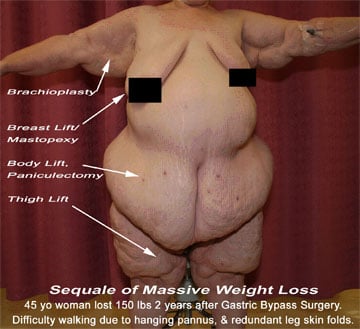
This challenge has led to the development of new ways of Body touring after Massive Weight Loss. As one patient said, “The weight reduction surgery saved my life. The Body Contouring gave me the opportunity to live a new life.”
After weight loss, almost all patients face multiple problem areas which require multiple surgeries. Before surgery, patient’s health needs to be optimized since many develop anemia or vitamin deficiency after bariatric surgery. Next, the sequence of multiple surgeries needs to be wisely devised with the help of an experienced plastic surgeon who specializes in Body Contouring Following Massive Weight Loss.
The most common post-bariatric body contouring plastic surgery is tummy tuck or abdominoplasty. These are not standard tummy tucks, but rather extensive or “High Tension” tummy tucks designed to also lift the sagging hips and thighs; while tightening the loose abdominal wall muscles. A more extensive form of this tummy tuck is call a Body Lift or Belt Lipectomy which removes the excess skin of the abdominal fold, as well as that from the back, resulting in a greater lift of the sagging buttocks and the thighs. Panniculectomy is a more specific form of a tummy tuck selected for those with extremely large, heavy, and hanging abdominal pannus.
Often, obesity results in the over-stretching and the weakening of the abdominal wall, which produces a Ventral Hernia. This and other types of hernias can also be repaired at the time of a tummy tuck or body lift.
The second most common body contouring procedure after massive weight loss is Breast Lift or Breast Reduction surgery. These procedures are not limited to women, since men also develop hanging breast/chest folds after weight loss. In women an Inverted-T or Anchor Mastopexy is used. Often breast implants are added to replenish the lost breast volume. This procedure is at times combined with an Upper Body Lift which removed the excess skin folds of the upper torso which extend to the upper back. Breast reduction surgery after massive weight loss in men has a different aim and design. Its goal is to create a flat and masculine chest. Breast reduction for men utilizes scar that fall in the under-breast fold as well as around the areola. It can also be combined with an upper body lift or a brachioplasty.
The third most common body contouring surgery following massive weight loss is Brachioplasty. Brachioplasty or Arm Tuck removes excess hanging skin of the upper arms. In its extended form, it also removes the redundant skin folds of the outer chest and the axilla or the armpit.
The fourth most prevalent post-bariatric plastic surgery procedure is a Thigh Lift. Thigh Lifts addresses he excess skin folds of the inner or medial thighs, that of the outer or lateral thighs, or that of the entire thigh. It can rather be extensive, extending along the entire length of the thighs and legs.
Finally, the least common plastic surgery procedure performed as a result of massive weight loss is a facelift. This is due to the fact that people gain relatively far less weight in their face that their body. Therefore, after massive weight loss there is relatively less loose skin of the face, as there would be on the other areas of the body. Never the less, patients can face, hanging neck folds, jowls, and cheeks after weight loss.
A variety of facial cosmetic surgeries including neck lift, facelift, mid-face lift, or a forehead lift can address problems associated with sagging facial skin.
In planning for body contouring procedures after massive weight loss special attention has to be given for optimizing safety and minimizing potential complications for these types of procedures that are rather lengthy, complicated, and performed on patients that might have other associated risk factors such as sleep apnea, obesity, diabetes, heart disease, venous insufficiency, malnutrition, etc. Therefore, these patients need to be medically optimized and cleared by an internist, pulmonologist, or a cardiologist prior to surgery. Furthermore, the surgery facility must be equipped and staffed to provide specialized care for such surgeries, as well as to provide extended post-surgical monitored care.
Body Lift
“I could not stop feeling like an obese person with all of this extra hanging skin reminding me daily about the weight that I carried around for years. Here I lost so many pounds; yet I was tucking my stomach into my pants.” — Chris, age 37
*Results May Vary
20,630 Americans underwent Body Lift or extended tummy tuck after massive weight loss in 2005. This was a 22% increase from the previous year. This number will continue to grow dramatically as more people undergo Bariatric Surgery or Gastric Bypass to treat their Morbid Obesity.
Stretching of the abdominal skin from pregnancy only occurs in the front of the abdomen. To the contrary, the skin of the entire torso stretches with massive weight gain, thus creating excessive skin folds and flab which are circumferential- both in the front and the back. Therefore, a standard tummy tuck or abdominoplasty would not suffice for those who have lost extreme weight. These people are better served with a Body lift, Belt Lipectomy, or circumferential Torsoplasty. Besides removing the excess skin, a body lift also tightens the abdominal wall muscles, contours and shapes the lower back and flanks, lifts and forms the buttocks, lifts the inner and out thighs, and removes the redundant and hanging Mons pubis. Because of its dramatic effect on tightening the thighs and the buttocks it is also called a Lower Body Lift.
“I lost 160 pounds through diet and exercise. I was thrilled at first, but then ending up with chronic infections and boils from the folds of skin on my stomach. The surgery to remove it was difficult – it took weeks to recover, and the scarring is visible. But I’m so much more comfortable now, and I’m thrilled to wear clothes that I once only dreamed of wearing.” — Lisa, age 51
*Results May Vary
A Body Lift is quite more involved and time consuming than even an extended abdominoplasty, thus the surgeon that performs its must not only be experienced in it but must also utilize proper surgical facility and staff.
Unlike a body lift a Panniculectomy is more like an abdominoplasty in that it only addresses the hanging pannus of the anterior abdomen. Unlike a tummy tuck, a panniculectomy most often does not include extensive or even any tightening of the abdominal wall. It is designed mostly for patients with extremely large, heavy, and hanging abdominal pannus who are too fragile to undergo a longer abdominoplasty procedure.
Often, obesity results in the over-stretching and the weakening of the abdominal wall, which produces a Ventral Hernia. This and other types of hernias can also be repaired at the time of a tummy tuck or body lift.
Breast Lift
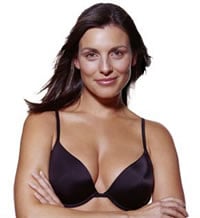
A Breast Lift, also known as Mastopexy, is a procedure to lift and reshape sagging breasts. According to the American Society of Plastic Surgeons, nearly 100,000 women underwent this procedure in 2005.
Any woman who has Ptosis, or sagging of the breasts, is a candidate for Breast Lift. Conditions that contribute to the Ptosis of the breasts include:
Aging: As women age, there is a gradual reduction in skin elasticity, as well as the stretching and elongation of the Cooper’s Ligaments, which are responsible for holding breast tissue up against the chest wall. The breast tissue itself also changes with age – from mostly firm, fibrous milk glands to fatty tissue, which is soft and saggy. This change accelerates with menopause, and the gradual reduction of estrogen levels.
Pregnancy and Nursing: Enlargement of the breasts during pregnancy, followed by their deflation after the end of breast feeding, also stretches the Cooper’s Ligaments, reducing fibrous tissue, breast volume and leading to Ptosis.
Large Breasts and Implants: The tissue and skin of inherently large breasts, or those that have been augmented with implants, stretch out from the breast weight, resulting in sagging.
Weight Loss: Rapid weight loss or dramatic fluctuations in body weight also cause the skin’s elasticity and breast tissue to decrease.
There are a variety of “litmus” tests to determine if the degree of sagging in your breasts is advanced enough to warrant a procedure. Many lay persons define breast sagging by how far the breast tissue descends on the chest wall. Plastic surgeons, however, define breast sagging based on the position of the nipple in relation to the breast mount – or Inframammary Fold. Degrees of sagging, each defined specifically by plastic surgeons are: Mild Ptosis, where the nipple is at the level of the Inframammary Fold; Moderate Ptosis, where the nipples have dropped below the level of the breast crease, but are still higher than that of most of the breast mount; Advanced Ptosis, where the nipples have dropped below the level of the Inframammary Fold and are just at the level of the maximum breast projection; and Severe Ptosis, where the nipples have dropped below the level of the Inframammary Fold, and below the breast mount, so they are pointing to the floor.
Other “tests” for sagging include “The Pencil Test” that defines sagging breasts as those which hold a pencil in place under the breast under-fold. While many women consider some degree of sagging as normal and natural, The Bra Test determines that breasts which fall upon removal of the bra are Ptotic breasts.
Together, you and your plastic surgeon will determine which kind of Breast Lift procedure is best for you.
During a Crescent Lift, the cosmetic surgeon removes a crescent-shaped piece of tissue above the areola and restores the tissue to a higher position. This creates a minor lift for patients who have Mild Ptosis. One risk of this technique is a slight egg-shaped areola for patients who have heavier breasts and do not wear good quality supportive bras following surgery.
During Concentric Mastopexy, also known as the Benelli Lift, the plastic surgeon makes circular incisions around the areola, and removes the doughnut-shaped skin between the two incisions. The plastic surgeon then moves the nipple and areola upward and stitches surrounding skin around the areola. The Benelli Lift works best in women with smaller breasts and minimal sagging. A variation of this is the Benelli-Lollipop, which has straight incisions from beneath the areola to the mammary fold, rather than the circular ones. This is considered appropriate for women with Medium Ptosis.
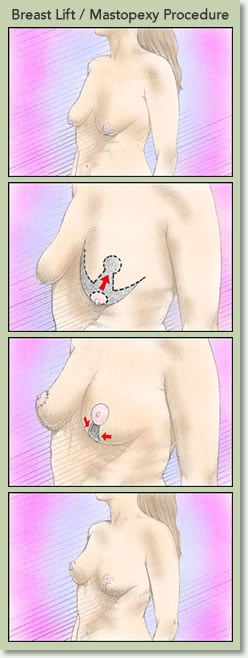
Anchor-Shaped Mastopexy is the most common, and also the most invasive, Breast Lift procedure. Your cosmetic surgeon will make an incision above your nipple, in the shape of an anchor, with a circle at the top. The nipple is placed in the circle at the top of the “anchor,” forming the shape of the new breast. The lines at the bottom form the lower contour of your breast. The plastic surgeon sutures the skin around the areola, vertically down to the chest, and side to side along the newly created bottom fold.
Sometimes, Breast Lift is combined with a Breast Augmentation (with an implant) procedure to restore breasts to a fuller and enhanced appearance. At other times, Breast Lift is combined with Breast Reduction surgery, with the aim of lifting the breasts while reducing their size to a more proportionate one. One alternative to a Breast Lift is a Nipple Lift alone. While this will not raise the breast itself to the fullest extent possible, it has the advantage of leaving a scar only around the upper half of the areola.
Breast Lift/Mastopexy is a very technically challenging procedure that should be performed only by a board-certified plastic and reconstructive surgeon who is highly experienced in performing it.
Arm Lift (Brachioplasty)
Brachioplasty, also known as Arm Lift or Arm Tuck, is a plastic surgery procedure designed to remove redundant, flabby, and sagging skin folds of the upper arms. Hanging arm skin folds, also known as “Bat Wings,” “Batwing Deformity” and “Bingo Wings” are not only unsightly, but also interfere with one’s ability to fit in sleeved tops, as well as causing underarm skin rash and irritation. Candidates for Arm Lift surgery are often embarrassed by their large and “jiggly” arms which they can’t hide!
Brachioplasty can now offer patients the freedom of a lifestyle that they couldn’t enjoy previously. In fact, the popularity of Brachioplasty has soared to a point that according to the American Society for Aesthetic Plastic Surgery, the number of Brachioplasty surgeries has tripled since 1997, with nearly 15,000 procedures being performed in 2005. Arm Lift surgery is not exclusive to women. Actually, many men also undergo Brachioplasty.
The majority of candidates for Brachioplasty are those have lost massive weight following Bariatric Surgery, also known as “stomach stapling” or “lap banding.” While these patients reap many health and psychological benefits from this weight loss, one of its aftereffects is sagging skin that hangs from the arms and other parts of the body. Because the skin has lost its elasticity following years of obesity, no amount of diet or exercise can restore firmness and tone to the arms. Another group of Arm Tuck candidates are those who have developed upper arm flabbiness, simply due to the loss of elasticity that accompanies aging or chronic tanning.
Brachioplasty or Arm Lift can help restore a person’s ability to wear blouses and shirts comfortably, to show their arms without feeling self-conscious, and to conduct their lives with greater freedom and confidence.
Men and women who are not good candidates for Brachioplasty include those who predominantly have excess fat, which are better served with first undergoing Liposuction. Also, people with Hidradenitis Suppurativa — a persistent ongoing infection of the sweat glands in their armpits, should not undergo Brachioplasty until treated appropriately. Finally, women who have had Radical Mastectomy or extensive breast cancer surgery are at risk of developing chronic arm swelling after undergoing Brachioplasty.
The type of Brachioplasty performed by your plastic surgeon depends upon the amount and location of your excess skin. If excess hanging skin is located within two inches from the armpit, your cosmetic surgeon can potentially pull up and tuck this excess skin into the armpit with an Axillary Brachioplasty or Mini Arm Tuck. For those whose excess skin extends like a “Bat Wing” from the armpit to the elbow, the only option is the complete removal of the arm flab in a Standard Brachioplasty or Standard Arm Lift.
It is extremely important to decide whether having a permanent scar is a good “trade off” for having smaller and firmer upper arms
An important consideration for Brachioplasty patients is the resulting scars. With a Mini Arm Tuck, the scar is limited to a semi-circular line hidden in the armpit. Standard Brachioplasty, however, results in a permanent scar extending the length of the upper arm, from the armpit to the elbow. This scar is either placed on the inner side of the arm, which is hidden in a normal pose; or at the bottom of the arm just, like the seam of a shirt. The severity of the scar’s appearance varies from patient to patient and cannot be predicted.
Thigh Lift
“Having my big thighs constantly rub together was disgusting. I always had a rash on my inner thighs, couldn’t exercises, and couldn’t wear pants. This went away after having a thigh lift.” — Desires, age 37
*Results May Vary
7,486 Americans underwent Thigh Lift or Thighplasty after massive weight loss in 2005. This was a 20% increase from the previous year. Although many candidates for Thigh Lift are those who had lost excessive weight after Bariatric or Gastric Bypass Surgery, there are others who develop inner and/or outer thigh sagging with aging, mild to moderate weight loss, and thigh liposuction.
Thigh Lift is a procedure which is designed to pull up, tighten, and contour sagging thighs. In doing so, it utilizes liposuction as well as excision of excess skin, and superior suspension of the thigh fascia to create smoother, and sleeker thighs. Obviously in those who have lost massive weight, and have folds upon folds of hanging thigh skin, the goal is just to rid themselves of this nuisance and enable them to ambulate freely and to better fit in pants.
Because there is a great variety in the extent of thigh sagging and skin redundancy, a variety of thigh lift procedures have evolved to satisfy different needs.
Flankplasty or Outer Thigh Lift
Flankplasty or the Outer Thigh Lift is a modification of an extended tummy tuck which removes excess flank skin and pulls up and tightens the outer thighs. In patients who have cellulite and outer thigh skin looseness this procedure is an ideal choice since it does not place any scars on the thighs, and that it can also be combined with a tummy tuck.
Medial or Inner Thigh Lift
A standard Medial or Inner thigh lift usually involves excision of crescent shaped skin wedge from the inner groin, pulling up and anchoring the thigh fascia to the pelvic bone, and contouring the thighs with liposuction. The final scar is very well hidden in the depth of the groin and under a bikini. Because of its limited skin excision the standard medial thigh lift is usually not suited for those who have large roles of excess inner thigh skin as a result of massive weight loss.
Extended Inner Thigh Lift
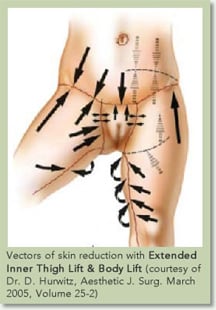
The Extended Inner thigh lift combines the standard medial thigh lift with a vertical line of skin excision that runs along the inner thigh, from the groin to the knee. The vertical component of this thigh lift greatly reduces the circumference of the thigh and removes excess skin along the entire length of the thigh. In some cases, this incision is even extend below the knee to remove excess skin of the legs. This is the thigh lift procedure of choice for those with massive weight loss after Bariatric surgery.
Dr. Younai is a Board Certified Plastic Surgeon with formal training in Plastic & Reconstructive Surgery, as well as General Surgery at some of the most prestigious university residencies in the United States. As a cosmetic plastic surgeon he has had ample experience in performing post-bariatric body contouring surgeries including tummy tuck, abdominoplasty, Panniculectomy, belt Lipectomy, repair of ventral hernia, body lift, thigh lift, Brachioplasty, upper body lift, breast reduction, and breast lift.
At the California Center for Plastic Surgery Dr. Younai will review your treatment options for massive weight loss body contouring, including pros and cons of each procedure, potential risks and complications, recovery course, pre and post operative instructions, and aesthetic outcomes. There are also many before-and-after pictures and high resolution images of Thigh Lift and Thighplasty procedures available in our photo gallery.
“I wish I could wear nice skirts again. I hate my sagging thighs and the folds around my knees.” — Amanda, age 45
*Results May Vary
Pre-Surgical Considerations
Timing of Body Contouring
People who undergo Bariatric Surgery are very excited to loss their excess body fat and anxious to look good, ASAP! Instead, they often found themselves with excessive hanging folds of skin. Naturally, their next goal becomes undergoing restorative body contouring plastic surgery. Most don’t know that how soon after Gastric Bypass surgery they can embark on Body Contouring Plastic Surgery.
The importance of this wait period is two folds. First, the best results are obtained after attaining maximum weight loss. Second, during the rapid weight loss period, the body is in the starvation phase, when surgical wounds don’t heal and surgery complication rate is the highest.
Nutritional Deficiencies
Post-bariatric surgery patients have special needs because of nutritional deficiencies that they inevitably suffer. This is because during the period of massive weight loss, bariatric surgery patients are suffering the malnourishment that normally accompanies losing large amounts of weight suddenly. Because they often lack key nutrients such as iron, B12, Folic Acid, Calcium and Potassium, massive weight loss patients should have a full nutritional and laboratory assessment to ensure that their body would heal after body contouring surgery.
Medical Optimization and Clearance
Some of the medical conditions caused by morbid obesity remain even after massive weight loss. These include sleep apnea, diabetes, hypertension, coronary artery disease, venous insufficiency, malnutrition, etc. Therefore, these patients need to be medically optimized and cleared by an internist, pulmonologist, or a cardiologist prior to surgery.
Surgical & Post-Surgical Care
Dr. Younai performs his surgeries at the Regency Surgery Center which is certified by Medicare, Blue Cross, AAAHC, and AAAASF. This state-of-the-art surgical facility is specially equipped and staffed to care for such patients.
Body contouring procedures are major surgeries and therefore carry major risks, which require special surgical preparations, as well as extensive post-surgical care. For example, patients with a history of morbid obesity bear a higher risk of developing blood clots in their legs (Deep Venous Thrombosis) which could be potentially fatal. Depending on their specific history of risk factors steps are taken during surgery and afterwards to lessen this risk. Also, to minimize the risk of surgery most experts recommend for the surgery time not to exceed 6-8 hours and the patient to remain warm during the course of the surgery.
These and many other requirements necessitate the use of a surgical and post-surgical facility that is equipped and staffed to specifically care for patients undergoing body contouring after massive weight loss.
Staged Reconstruction
Prioritize! While there may be many areas of your body upon which you desire contouring, it is unlikely that you can “fix” all of them at once. It is also possible that you may ultimately choose only one form of Body Contouring.
If you are planning more than one surgery, your plastic surgeon should explain the impact of the earlier surgery on later ones.
An expert plastic surgeon who specializes in Body Contouring will therefore help patients stage their surgeries in the most efficient and appropriate order. For example if you are considering breast enlargement and lift, body lift, and thigh lift; the body lift should be conducted prior to the thigh lift, because it also helps to lift the thighs. Furthermore, tightening the abdominal skin with a body lift will also changes the pull and the lift on the breasts. It also changes the shape of the torso. So it is best to postpone breast surgery until after you have first reached the final trunk contour and body proportion with a body lift or tummy tuck. Then you can choose the appropriate size breast implant that would be harmonious with your final frame.
If you opt for multiple procedures, it is unlikely that they can all be performed at once, due to safety issues. A skilled and experienced plastic surgeon will optimize your safety by “staging” the body contouring process, often in intervals of every two months. This not only makes your safety a top priority. It also allows for optimal healing in between surgeries.
Risks & Complications
Scars
The tradeoff for your flatter and tighter abdomen will be surgical scars that are permanent. While no surgeon, however skilled, can perform surgery without scars, scars do usually fade with time, taking up to 18 months. Some people are genetically predisposed to bad scarring, or even formation of keloids or hypertrophic scars. While it is generally perceived that only dark-skinned people develop Keloids, the fact is that light-skinned people and people from all ethnic backgrounds can develop Keloids, hypertrophic, or “bad scars”. Dr. Younai, and/or his staff review the place of Tummy Tuck or Body Lift scars with every patient prior to surgery, in order to place them in a location that can be better hidden by bathing suits or underwear.
Bleeding
It is possible, though uncommon, to experience some bleeding during or after surgery. Should excessive bleeding occur, it might require a blood transfusion, or even emergency surgery. But most commonly, localized small amounts of blood collected under the skin (hematoma) can be easily treated through aspiration or the placement of a drain. Dr. Younai, like majority of other plastic surgeons, routinely uses drains that help remove any excess fluid or blood collection.
To reduce the chance and risk of bleeding with surgery, you must not take any blood thinners, such as aspirin, anti-inflammatory, or vitamin E for 10 days prior and after your surgery.
Infection
There is a very small chance of developing infection after any surgery. You will be given antibiotics during your surgery and be given a prescription for antibiotics to take after your surgery, in order to reduce the risk of infection.
Pain
While people have varying thresholds for pain, it is an expected result from any surgery. This can be addressed through a prescribed medication from your cosmetic surgeon. Nevertheless, you should be aware that although pain medications do help reduce the degree of pain and make it more tolerable, there is no pain medication that will completely eliminate pain.
Nausea
Anesthetics, narcotics, and antibiotics do cause nausea. You will be prescribed an anti-nausea medication, both just-before, during, and after your surgery. Taking your medications with food helps to reduce the incidence and degree of post-operative nausea.
Persistent Swelling & Bruising
It is normal for skin of the abdomen, navel, genitalia, buttocks, and thighs to become inflamed, swollen, and bruised following the surgery, and to remain so for some weeks. In rare cases, this can persist for many months or can even be permanent if patient has poor circulation. To minimize swelling and bruising after surgery patients are required to wear a support garment 24 hours a day for three weeks, and then only during the daytime for the following three weeks. Massaging these areas as much as three to four times a day is also very helpful. It is normally expected for the skin to become dry and itchy after surgery. Massaging with heavy lotion and skin moisturizer is essential. You do not need expensive creams to do so – Vaseline, Vitamin E, or any kind of greasy lotion will do. It’s the grease that does the trick! It is good, when possible, to have your spouse or significant other to perform the massage. This helps to accustom a couple to your new look, and to reduce any trepidation that you may both be feeling.
Change in Skin Sensation
The area of abdomen, pubic area, flanks, and parts of the thighs do become numb, after this surgery. This usually resolves gradually over three to eight months, but you can have residual permanent loss of sensation or even hyper-sensitivity in some areas.
Itching, tenderness, or exaggerated responses to hot or cold temperatures may occur after Tummy Tuck, Body Lift, or Thigh Lift, but is usually short-lived and can be alleviated by moisturizing, medication, and massage.
Sutures
Most surgical techniques use deep sutures, which might spontaneously poke through the skin, become visible, or produce irritation that might require removal.
Skin Contour Irregularities
Contour and shape irregularities and depressions may occur after a tummy tuck, body lift, or thigh lift. Residual skin irregularities at the ends of the incision or “dog ears” are always possible as is skin pleating when there is excessive redundant skin. These do usually improve with massage over time, but may require surgical correction.
Fat Necrosis
As your tissues heal after surgery, sometime, some of the deeper skin fat might die. Usually, this is of no consequence, but sometimes it might produce areas of firmness or contour irregularities.
Pubic Distortion
One of the benefits of Tummy tuck and Body Lift is the lifting and flattening of the protruding and sagging pubic skin. Rarely, women develop distortion of their labia and pubic area. Usually, this corrects itself, but sometimes corrective surgery is required.
Asymmetry
Most patients have differences between the right and left sides of their body before any surgery is performed, and surgery might not be able to correct that. Therefore, even after a Tummy Tuck or Body Lift, there may not be perfect symmetry in the body’s appearance. Factors such as skin tone, fatty deposits, skeletal prominence, and muscle tone may contribute to normal asymmetry in body features.
Wound Separation & Delayed Healing
Wound disruption or delayed wound healing is possible. Some areas of the surgical incision in the flank, back, or buttock may not heal normally and may take weeks to heal. Some areas of the skin may even die. This may require frequent dressing changes or surgery to remove the non-healed tissue and to close the wounds secondarily. Smokers and those with diabetes, multiple medical problems, and severe obesity have a greater risk of skin loss and wound healing complications.
Seroma
Fluid accumulations frequently occur between the skin and the abdominal wall, legs, flanks, back, or buttocks. Dr. Younai, as well as, many other plastic surgeons routinely use drains in these areas in order to remove excess fluid. If you develop seroma, it can easily be drained in the doctor’s office.
Umbilicus
Malposition, scarring, unacceptable appearance or loss of the umbilicus or belly button may occur.
Allergic Reactions- In rare cases, local allergies to tape, suture material and glue, blood products, topical preparations or injected agents have been reported. Serious systemic reactions including shock (anaphylaxis) may occur from drugs used during surgery and prescription medications. Allergic reactions may require additional treatments.
“Blood Clots” (Deep Venous Thrombosis, Cardiac & Pulmonary Complications).
Lengthy procedures may be associated with the formation of, or increase in, blood clots in the veins in the legs while you are immobilized, with the risk that they will travel to other parts of your body, including your lungs. Pulmonary embolism can be life threatening or fatal in some circumstances. You can reduce this risk by moving as soon as possible following your surgery. It is important to discuss with your surgeon any past history of blood clots, swollen legs or the use of estrogen or birth control pills that may contribute to this condition. After surgery, if you experience shortness of breath, chest pain, or an irregular heartbeat, notify your doctor and seek medical attention immediately. Treatment of this complication may require hospitalization and additional treatments.
Damage to Deeper Structures
As with any surgery there is a rare potential for injury to deeper structures including, nerves, blood vessels, muscles, and lungs (pneumothorax). Treatment may require further surgery and hospitalization.
Shock
In rare circumstances, your surgical procedure can cause severe trauma, particularly when multiple or extensive procedures are performed. Although serious complications are infrequent, infections or excessive fluid loss can lead to severe illness and even death. If surgical shock occurs, hospitalization and additional treatments would be necessary.
Large Volume Liposuction & weight Loss for Plus Size Women in Los Angeles
Liposuction for Plus Size Women has enabled full-figured women to enjoy freedom of mobility and a newfound beauty and confidence. Large volume liposuction can remove 30 lbs. of fat and reduce dress size from 22 to 10 with only one session of liposuction. Large volume liposuction is a serious surgery that should only be performed by very experienced Board-Certified Plastic Surgeons with the support of skilled Anesthesiologists and certified surgery centers.
Large volume liposuction technique is performed in a way to shape high BMI women in Los Angeles to not only have a narrow and curvy waistline, but also a better shaped buttocks and curves.
#liposuction #largevolumeliposuction #plussize #plussizemodels #plussizecloths #largevolumelipo #plussizelipo #liposuction #weightloss #highBMI #HighBMIwomen #liposuctionsafety #liposuctionbeforeandafter #liposuctionrecovery #liposuctionspecialist #liposuctionLA #liposuctionresults