


Arm Lift
Consultations offered at our three convenient locations in Encino, Glendale and Bakersfield
For many women, especially in warm climates like Los Angeles, arm lift surgery can make sleeveless tops and spaghetti straps more attractive than ever. Due to a combination of weight gain, genetics, and aging, many women develop unsightly upper arm flab. Others have loose skin that remains following massive weight loss. In either case, an arm lift can give you the trim, athletic arms that are so desirable these days.
An upper arm lift works by removing excess skin and fat that often hangs below the triceps. This extra tissue can make it difficult to find flattering clothing, both with sleeves and without. As our society puts a greater emphasis on fitness, more and more women want the toned arms that so many famous women are able to show off.
For many women, no amount of time in the gym can produce those slim, muscular arms. This is especially true for women who have already achieved massive weight loss. The stretched skin on the upper arms remains long after the fat is gone, regardless of how many reps they do.
During an arm lift, also known as brachioplasty, Dr. Younai makes an incision along the underside of your upper arm. The excess skin is removed and pulled tight to create a slimmer, more athletic contour. If excess fat is present, liposuction may be necessary before you can undergo an arm lift. If the hanging skin is located within a couple inches of the arm pit, a mini arm tuck may be all you need. This procedure has a much smaller scar.
Dr. Younai has performed countless upper arm lifts and can help you figure out the best procedure to realize your goals. If you are ready to see the arms you always imagined you could have when you were in the gym, Dr. Younai is here to help you.
Contents
- 1 Why Get an Arm Lift
- 2 The Procedure
- 3 Before and After Photos
- 4 Candidates
- 5 Preparations
- 6 Recovery
- 7 Revision
- 8 Surgeon Qualifications
- 9 Anesthesia
- 10 Risks & Complications
- 11 Q&A
- 11.1 Liposuction vs. Brachioplasty?
- 11.2 When Will I Notice Results?
- 11.3 How Prominent Are The Scars?
- 11.4 What If Permanent Scars Are Unacceptable?
- 11.5 What Are Some Benefits?
- 11.6 Will Brachioplasty Improve My Muscle Tone?
- 11.7 Is Brachioplasty Always Combined with Liposuction?
- 11.8 Is Brachioplasty Performed with Other Procedures?
Why Get an Arm Lift
Arm Lift, also known as Brachioplasty or Arm Tuck, is a plastic surgery procedure designed to remove redundant, flabby, and sagging skin folds of the upper arms.
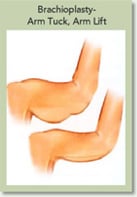
Hanging arm skin folds, also known as “Bat Wings,” “Batwing Deformity,” and “Bingo Wings” are not only unsightly, but also interfere with one’s ability to fit in sleeved tops, as well as causing underarm skin rash and irritation. Candidates for Arm Lift surgery are often embarrassed by their large and “jiggly” arms which they can’t hide!
Brachioplasty can now offer patients the freedom of a lifestyle that they couldn’t enjoy previously. In fact, the popularity of the procedure has soared to a point that according to the American Society for Aesthetic Plastic Surgery, the number of Brachioplasty surgeries has tripled since 1997, with nearly 15,000 procedures being performed in 2005. Arm Lift surgery is not exclusive to women. Actually, many men also undergo the procedure as well.
Women and men seek brachioplasty as a result of a number of factors. In all cases, however, an excess of skin and fatty tissue is what leads to the “batwing-like” appearance that an arm lift aims to correct.
Causes
- Weight Loss
- Aging
- Genetics
For the most part, this condition occurs in people who have lost a significant amount of weight, leaving excess skin in the process. This is especially prevalent in patients who have undergone some form of bariatric surgery, such as a gastric bypass or lap band. People who achieve weight loss through diet and exercise alone can also be left with excess skin. Aging and chronic tanning can cause skin to lose its elasticity, resulting in upper arm flabbiness as well. And for many people, they are genetically predisposed to store weight in certain areas, such as the upper arms. Fortunately, brachioplasty can help all of these groups of people get the firm, shapely arms they desire.
The majority of candidates for Brachioplasty are those who have lost massive weight following Bariatric Surgery, also known as “stomach stapling” or “lap banding.” While these patients reap many health and psychological benefits from this weight loss, one of its after-effects is sagging skin that hangs from the arms and other parts of the body. Because the skin has lost its elasticity following years of obesity, no amount of diet or exercise can restore firmness and tone to the arms. Another group of Arm Tuck candidates are those who have developed upper arm flabbiness, simply due to the loss of elasticity that accompanies aging or chronic tanning.
Brachioplasty can help restore a person’s ability to wear blouses and shirts comfortably, to show their arms without feeling self-conscious, and to conduct their lives with greater freedom and confidence.
Men and women who are not good candidates for Brachioplasty include those who predominantly have excess fat, which are better served with first undergoing Liposuction. Also, people with Hidradenitis Suppurativa — a persistent ongoing infection of the sweat glands in their armpits, should not undergo Brachioplasty until treated appropriately. Finally, women who have had Radical Mastectomy or extensive breast cancer surgery are at risk of developing chronic arm swelling after undergoing Brachioplasty.
There are two main types of arm lift that can be used to sculpt once flabby upper arms. The amount and location of excess tissue will largely determine which procedure is right for you.
Types Of Brachioplasty
Sometimes referred to as a mini arm tuck, this procedure is appropriate for patients whose excess tissue is located within two inches of the underarms. The excess tissue is then pulled up and tucked into the underarm. This procedure involves a more limited incision, resulting in minimal scarring.
Patients who have excess tissue extending from the underarm to the elbow will need to have a standard arm lift to achieve the best results. The incision will be more prominent than with a mini arm tuck, as the excess tissue will be completely removed.
The Procedure
Arm lifts are usually performed under general anesthesia. Dr. Younai will then make an incision. The size and placement of the incision will vary depending on the type of arm lift you are having. A mini arm tuck will usually be performed using a small, crescent-shaped incision in the underarm. A standard arm lift may require an incision running the entire length of the upper arm, from the underarm to the elbow. This incision can be made either on the inside of the arm or along the back of the arm. Dr. Younai can help you decide which location is most appropriate for your procedure. Once the incision is made, excess skin and fatty tissue is either tucked back or removed entirely. The underlying tissues are then sutured in order to “tighten” the arm before the incisions are sealed. Scarring from the incision will vary from patient to patient and is generally considered the “trade-off” for having lean, trimmed arms.
The type of Brachioplasty performed by your plastic surgeon depends upon the amount and location of your excess skin. If excess hanging skin is located within two inches from the armpit, your cosmetic surgeon can potentially pull up and tuck this excess skin into the armpit with an Axillary Brachioplasty or Mini Arm Tuck. For those whose excess skin extends like a “Bat Wing” from the armpit to the elbow, the only option is the complete removal of the arm flab in a Standard Brachioplasty or Standard Arm Lift.
The extent of an Arm Lift or Brachioplasty surgery and the length of the scars depend on the amount of excess skin as well as its location.
For instance, if most of the excess hanging skin is located very close to the armpit (axilla) and do not extend more than two inches away from the armpit, it is possible to pull up and tuck this excess skin into the armpit. In other words, the excess skin is gathered up towards the armpit, excised, and the final surgical scar would end up looking like a semi-circular line which is hidden in the armpit. This procedure is referred to Axillary Brachioplasty or Mini-Arm Tuck.
For those who have much greater excess skin, which extends like a “bat wing” to the elbow, the only viable option is complete removal of the entire length of the arm flab from the axilla to the level of the elbow. This procedure would be considered a more traditional or Standard Brachioplasty or Arm Lift.
Finally, there are those who after having undergone massive weight loss, have redundant skin folds extending on the either sides of the chest, in addition to having hanging arm folds. These patients are candidates for an Extended Brachioplasty. An extended brachioplasty or arm tuck extends the scar from the elbow to the armpit and along the outer sides of the chest to the level of the horizontal bra strap. This enables the reduction of most of the upper torso in a way that patients can fit better into tops or shirts.
During Standard Brachioplasty, it is possible to perform limited Liposuction of the arms in order to better contour and prepare the arms for a lift. This method involves an incision that extends from the axilla, or armpit, to the elbow on the inside of the arm. The excess skin flab is completely excised. First, the deep layers of the wound and then the more superficial, and finally the skin wound is closed with mostly dissolvable sutures. Before closure, drains are placed and brought out through small holes in the axilla. The final scar is usually a T-shaped line with the long limb going along the length of the arm, and the short limb extending across the armpit. (Some surgeons vary the shape of this scar into an L-shaped scar.)
There are usually two different locations for the placement of the long arm of the T-scar. Some patients and doctors prefer placing this line on the most dependent or the lowest point of the arms, while others like the scar to run along the mid-section of the arm. The advantage of the first type is that it does not show as much with the arms opened apart, but its disadvantage is that from the back it is more visible. With the second option, the scar is not as noticeable from either the front or the back as long as the arms are at the sides.
In the case of an Extended Brachioplasty, the incision is extended from the elbow to the axilla and then along the outer aspects of the chest, in some ways, like the seams of a shirt or jacket. The transition from the arm to the chest is made into a zigzag scar, which is placed in the axilla, in order to prevent formation of cicatricial scar bands.
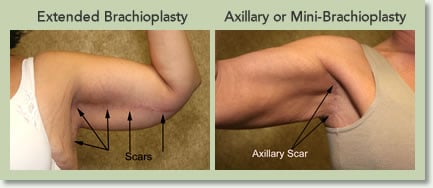 During your consultation, Dr. Younai reviews pros and cons of the Extended vs. Axillary Brachioplasty, potential risks and complications, recovery course, pre and post operative instructions, and esthetic outcomes. There are also many before-and-after pictures and high resolution images of Arm Tuck/ Arm Lift available in our photo gallery.
Before and After Photos


Candidates
“I’ve lost 80 pounds after gastric bypass surgery, and I’m still losing weight. A year after the surgery, I had a meeting with my boss, and extended my arm towards him to make a point more emphatically. But, instead of making my case, I froze – mortified – because the loose skin from my arm just kept jiggling. It took on a life of its own! My boss was as embarrassed as I was. No matter how much weight I lose, I just can’t get rid of that loose skin that hangs from my body from all of those years of being obese. It was stretched out for too long.”
–Myra, age 41
Brachioplasty, also known as “Arm Lift” or “Arm Tuck,” is a procedure to remove redundant flabby and sagging skin folds of the upper arms. Colloquially, this surplus skin is described as “Bat Wings” or “Batwing Deformity,” and sometimes as “Bingo Wings.” Arm-Lift or Brachioplasty allows patients to once again enjoy arms that are firm, toned, and proportionate with the rest of their body. For some patients, the need to undergo a Brachioplasty surpasses that of a Tummy Tuck because they are unable to find shirts that have wide enough arms or are uncomfortable with showing their arms at all.
The popularity of the Brachioplasty has increased along with the growing number of people who have lost massive amounts of weight either through dieting or bariatric surgery- Gastric bypass, “stomach stapling,” or lap-banding.
According to the American Society for Aesthetic Plastic Surgery, nearly 15,000 Arm Lifts (Brachioplasties) were performed in 2005, a more than threefold increase since 1997.
Good Candidates
“After I lost a lot of weight following gastric bypass, all the hanging loose skin bothered me. But my arms bothered me the most. I was good about going to the gym, but was embarrassed during workouts because the skin on my arms moved back and forth. I wanted to correct their appearance first.”
— June, age 25
Women and men who have loose, flabby, and hanging skin folds of the upper arms after having lost much weight and who can accept some scarring as a tradeoff for having firmer, tighter, and smaller upper arms, are good candidates for Arm Lift/ Brachioplasty. However, you have to be sure that you are willing to trade your “Bat Wings” for the permanent scars that will extend under the arm from the armpit to the elbow. Among this group is a growing population of adults who have had massive weight loss and resulting sagging arms after Gastric Bypass Bariatric surgery.
Also there are women who develop flabby arms not because of massive weight loss, but rather as a result of aging and loss of skin elasticity. These women have not been able to tighten-up or firmed-up their arms, no matter how much they have exercised.
Not Good Candidates
- If your main problem is heavy arms due to excess fat, then Liposuction may be a better option, at least initially. It is best to first reduce the volume of your arms through Liposuction before proceeding with an Arm Tuck or Brachioplasty.
- People with Hidradenitis Suppurativa of the armpits. Hidradenitis is a condition when there is excess drainage and persistent ongoing infection of the sweat glands. Because there is a constant drainage of puss from the armpits, it is not wise to undergo surgery on the adjacent arms, until after you have had proper treatment for Hidradenitis.
- Patients after Radical Mastectomy. Lymph fluid from the upper extremities drains to the armpit lymph nodes. These are mostly removed with the Radical and to a lesser extent with the Modified Radical Mastectomy. Therefore, after such surgeries patients are predisposed to have chronic swelling or edema of their arms. Further surgery on the arms, such as an Arm Tuck can further damage the lymphatic drainage of the arms.
During your consultation, Dr. Younai reviews your treatment options for Brachioplasty, including pros and cons of each procedure, potential risks and complications, recovery course, pre and post operative instructions, and esthetic outcomes. There are also many before-and-after pictures and high resolution images of Arm Tuck/ Arm Lift available in our photo gallery.
Preparations

The surgeon will provide very specific instructions prior to surgery so you will have an optimal and safe experience. These include what medications to avoid to prevent excessive bleeding and bruising, required medical exams, what to eat and drink prior to surgery, and the prescription of an anti-nausea pill to take on the morning of the surgery.
In all cases, you will be asked to have a reliable friend or family member take you home after the surgery, as you will not be allowed to drive.
Pre-Surgery Checklist
- If you are older than 45 years, or have heart disease, we require a pre-operative EKG, which would either be done by your internist, cardiologist, or at our facility. Heart disease and all other medical illnesses need to be monitored first by an internist or specialist.
- If you are anemic, or have a low blood count, please notify our office well in advance of surgery so that we can start you on Iron supplement. You cannot have liposuction if you are anemic.
- Pre-operative laboratory blood and urine tests are done usually within 10 days of your surgery date. If you do have health insurance this might be covered, otherwise, the laboratory will charge you.
- If you have specific medical illnesses, allergies, or physical handicaps, please notify our staff during your pre-operative visit.
- Please refrain from taking any Aspirin, Aleve, Advil, Motrin or other NSAID for ten days before your surgery. These drugs can increase the incidence of bleeding and bruising.
- Do not drink or eat after midnight, the night before your surgery. This means no coffee or breakfast in the morning of your surgery. You should take all your medications with a little water.

- Please remove and leave behind all jewelry, watches, and body rings before you come in for your surgery. Please do not wear any makeup or perfume.
- Before leaving home for your surgery, take one “nausea pill” – COMPAZINE – with a little water.
- Please wear comfortable and loose clothing the day of surgery. It would be helpful if you wear front open tops and loose sweatpants.
- We ask you to check the fit of your compression garment in advance and to bring it with you to surgery.
- You should make arrangements for a responsible adult friend or family member to take you home after surgery. You are not allowed to drive yourself home or take a taxi. After surgery, this caregiver is required to stay with you and to monitor and assist you for at least the first 24 hours after surgery. If you don’t have such a person please let us know in advance so that we can help you make arrangements for a stay at an after-care facility or hospital.
- You need to purchase two surgical arm compression garments that fit you comfortably, before surgery. You can purchase these either on-line from plastic surgery garment companies, or through your plastic surgeon’s office. Bring these garments with you to the surgery center on the day of your surgery. You are expected to be wearing these over a t-shirt for about 4-6 weeks after surgery, therefore, spend some time and attention to getting a compression garment that fits you well and is comfortable.
- Have some comfortable shirts available to wear during the first four weeks after surgery. You don’t have to wear larger size shirts, but just comfortable ones, especially at the arms.
- Tend to all of your chores and to do things before your surgery so you don’t have to worry about taking care of things early during your recuperation. You are not allowed to engage in heavy lifting for several weeks after surgery. This means if you should make arrangements for someone to help you with your heavy lifting chores for two weeks after surgery.
- Have your hair cut, pay your bills, and take your dog to the vet before your planned day of surgery!
- Rent your favorite movies and leave easily prepared foods and snacks in areas where you will not have to lift or reach.
- Place all of the medications, tissues, reading materials, water bottles on one table, within easy reach.
- Have ice cold cola drinks, ginger ale, or sport drinks close to your bed. Avoid drinking too much plain water after surgery, because it makes you more nauseated.
- After surgery take your nausea pill about one hour before your other medications to lessen nausea. Also, have some over-the-counter anti-acids available at your bedside.
 Some surgeons recommend putting cold packs on your arms afterwards. In my opinion, even though cold might lessen the inflammation, it can also cause frostbites or skin damage while your arms are numb after surgery. The best way of reducing swelling after surgery is elevating the extremities over several pillows.
 - Arnica Montana or Bromelain homeopathic herbs have been used in Europe for centuries to treat swelling, soreness and bruising. When properly prepared, Arnica may significantly decrease the healing time. There are many formulations from different companies. Sublingual (under the tongue) types are the most often recommended for plastic surgery. I have seen variable results with its use. There are some patients that did not benefit from it and other who appeared to benefit. Therefore, I am open to its use if a patient would like to use it.
Having a support system of family, friends or a professional caregiver in the days following surgery is of the utmost importance, as the patient will need assistance with everyday tasks, such as going to the bathroom.
Recovery

Recovery takes three to four weeks. Following surgery, your arm will be placed in a special compression garment to help the newly sculpted skin adhere to the underlying tissue. Also, you will probably have thin drains inserted under each arm to collect fluid, and which will be removed in two to three days. You should expect to feel groggy for at least a week, although each person’s recovery is unique. During this time, you will be advised to avoid lifting and strenuous movements. Your plastic surgeon will also tell you to keep your arm elevated with pillows to minimize discomfort while you heal. Sutures are usually removed within two to three weeks, and swelling and bruising generally take three to six months to disappear. Scars will remain visible, but fade for up to two years. Most patients can return to work after one week, unless it involves strenuous physical activity.
There are varying points of view about having patients wear compression garments. Some cosmetic surgeons emphasize the importance of wearing one for about three weeks. Other cosmetic surgeons disagree, stating that the constriction often results in blistering.
The latter group of physicians recommends other methods to control post-surgical swelling and bruising. These include an herbal combination of Arnica Montana, a plant extract, and bromelain, a pineapple extract. The recommendation is that they be used three or four days prior to surgery and for a couple of weeks post-surgery. These are options that you should discuss thoroughly with your plastic surgeon.
Some plastic surgeons also recommend improving lymphatic drainage and decreasing swelling and bruising through a series of lymphatic drainage massage treatments, to be performed once a week for three weeks. Some surgeons offer this massage therapy in their offices. Patients are encouraged to massage their scars after the sutures are removed.
Post-Operative Instructions

- You should make arrangements for a responsible adult friend or family member to take you home after surgery. You are not allowed to drive yourself home or take a taxi. After surgery, this caregiver is required to stay with you and to monitor and assist you for at least the first 24 hours after surgery. If you don’t have such a person, please let us know in advance so that we can help you make arrangements to stay at an after-care facility or hospital.
- Rest as needed the day of and the day after surgery. You do not have to stay in bed. Gentle walking at home will help your circulation.
- Make sure that you drink adequate amount of fluids so that you do not get dehydrated. You should also monitor your level of hydration by making sure that you are urinating “light-color” urine at least every four to six hours.
- There are no dietary restrictions; however, you should refrain from eating greasy or acidic foods so that you will not get nauseated.
- If you are diabetic, make sure to monitor your blood sugar level with a finger-stick or other usual means, three times per day, for the first 2 days.
- For the first 24 hours after surgery you might have some blood-tinged drainage from surgical sites. This is expected.
- After surgery, your arms will be placed in a compression garment, which will be covering the areas liposuctioned and/or excised. Do not remove garment until the first post-op visit. Keep your arms straight.
- Refrain from extraneous activities or exercising for the first three weeks. Although you can do gentle walking during this period, unless it is not a challenge for you.
- After about four weeks you can resume your exercise routine if you feel comfortable and strong enough
Revision
The most common reason for dissatisfaction with brachioplasty or arm tuck results is visible unsightly scars. Some women say-what is the point of undergoing cosmetic surgery on your arms if you still can’t show them or wear sleeveless cloths. The second most common reason for not being happy with the outcome of one’s Brachioplasty is the persistence of large and chubby arms.
Dr. Younai is a Board-Certified Plastic Surgeon who has had experience with the revision of Brachioplasty and other body contouring procedures. In order to hide brachioplasty scars, Dr. Younai utilizes his modification of the Beverly Hills brachioplasty. This technique moves the scars from the midsection of the arms to underneath arm where it can neither be visible from the front nor the back. For those who still have large arms after brachioplasty, it is possible to conduct liposuction and revision Brachioplasty to further reduce the circumference of the arms.
Having said this, it may not be possible to fully correct, revise, or improve upon the result of your tummy tuck. During your consultation, Dr. Younai will review your treatment options for revision Brachioplasty or Arm Tuck, including pros and cons of each procedure, potential risks and complications, recovery course, pre and post operative instructions, and esthetic outcomes. There are also many before-and-after pictures and high resolution images of Brachioplasty available in our photo gallery.
Scars
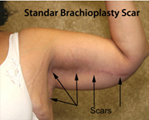
Sagging arms is a common complaint among many women, including those who have had massive weight loss from gastric bypass surgery. While women who have loose and hanging arm skin would love to have their arms trimmed, many are reluctant to pursue Brachioplasty because of its noticeable and visible scars.
Women who want to get arm tuck or brachioplasty say that their reason for having this post-weight lose cosmetic surgery is to be able to wear short sleeves. How can they wear short sleeves if they are going to have long visible scars on their arms?
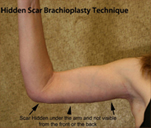
The answer to women who shy away from brachioplasty because of its “ugly scars” is a new Brachioplasty technique designed by a Beverly Hills Plastic Surgeon-Dr. S. Sean Younai. Dr. Younai hides the brachioplasty scar at the bottom of the arms where it is not visible from either, the front or back of the arms. He says that “I place my brachioplasty incisions were tailors place the seam of the jacket” and therefore like the seam of the jacket this new brachioplasty scar is not visible in normal pose.
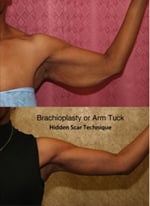
While, this new arm tuck technique is only a variant of the standard brachioplasty technique, it is very hard cosmetic surgery technique to execute. Thus, it would require a Board Certified Plastic Surgeon who is very experienced in all aspects of body contouring after massive weight loss.
It is very important to review and analyze the before and after pictures of brachioplasty scars of different plastic surgeons before proceeding with this complex plastic surgery.
Surgeon Qualifications
Brachioplasty or Arm Lift surgery requires a great deal of surgical skill as well as knowledge of upper extremities complex anatomy, including the locations of important nerves and arteries. Unlike some might believe, Brachioplasty is much more than just tucking skin. In removing the excess fat of the upper arm, the plastic surgeon must protect delicate structures, including the veins and superficial nerves.
Therefore, you should only trust this task to a Board Certified Plastic Surgeon who has had experience with the different styles of Brachioplasty. A so called “cosmetic surgeon” who is in reality a physician who has taken a short and limited course in plastic surgery does not have the depth of knowledge and experience to properly and safely perform a Brachioplasty or Arm Tuck.
The American Board of Plastic Surgery (ABPS) is one of 24 boards recognized by the American Board of Medical Specialties, and it is the only one that certifies physicians in the full spectrum of plastic surgery, including Cosmetic & Reconstructive surgeries of the upper extremities, trunk, face, and the head and neck.
When you choose an ABPS certified physician (www.abplsurg.org), you are guaranteed the services of a specialist who has endured the most rigorous training. This includes graduation from an accredited medical school, five to seven years of internship and residency, including three to five years of training in general surgery and two years of training in plastic surgery. The physician must also complete demanding written and oral exams.
Anesthesia
Usually, Arm Lift is performed under general anesthesia, and takes two to three hours. Because of the complexity of this procedure, and the need to have the patient remain still for several hours, it is very difficult to perform this procedure under local anesthesia, unless only very little skin is going to be removed in the armpits.
I must also emphasize that it is vital to also have a competent Board Certified Anesthesiologist as it is your anesthesiologist who holds your life in his or her hands.
Risks & Complications
Brachioplasty is a surgical procedure that is used to help remove the excess skin and fatty tissue from the axilla and upper arm.
Brachioplasty is not a surgical treatment for being overweight. Obese individuals who intend to lose weight should postpone all forms of body-contouring surgery until they have reached a stable weight.
There are a variety of different techniques used by plastic surgeons for brachioplasty. Brachioplasty can be combined with other forms of body-contouring surgery, including suction-assisted lipectomy, or other elective surgeries. Your surgery may require the transfusion of blood products; however, this varies on a case-by-case basis.
Alternative Treatments
Brachioplasty is an elective surgical operation. Alternative forms of management consist of not treating the areas of loose skin and fatty deposits. Liposuction surgery may be a surgical alternative to brachioplasty if there is good skin tone and localized fatty deposits in an individual of normal weight. Diet and exercise regimens may be of benefit in the overall reduction of excess body fat. Risks and potential complications are also associated with alternative surgical forms of treatment.
Every surgical procedure involves a certain amount of risk, and it is important that you understand these risks and the possible complications associated with them. In addition, every procedure has limitations. An individual’s choice to undergo a surgical procedure is based on the comparison of the risk to potential benefit. Although the majority of patients do not experience these complications, you should discuss each of them with your plastic surgeon to make sure you completely understand all possible consequences of brachioplasty.
Bleeding – It is possible, though unusual, to experience a bleeding episode during or after surgery. Intraoperative blood transfusions may be required. Should post-operative bleeding occur, it may require an emergency treatment to drain the accumulated blood or blood transfusion. Do not take any aspirin or anti-inflammatory medications for ten days before surgery, as this may increase the risk of bleeding. Non-prescription “herbs” and dietary supplements can increase the risk of surgical bleeding. Hematoma can occur at any time following injury. If blood transfusions are needed to treat blood loss, there is a risk of blood-related infections such as hepatitis and HIV (AIDS). Heparin medications that are used to prevent blood clots in veins can produce bleeding and decreased blood platelets.
A Mayo Clinic study reported that minor complications arise in approximately 25 percent of Arm Lift cases. These included: fluid collection under the skin (10 percent), poor scarring (10 percent), skin infection abscesses under the skin (2.5 percent) and wound separation (7.5 percent). Nerve damage was reported in five percent of the patients and prolonged numbness in one patient in the study. None of the patients required operative treatment for these complications.
Infection – Infection is unusual after surgery. Should an infection occur, additional treatment including antibiotics, hospitalization, or additional surgery may be necessary.
Change in Sensation – It is common to experience diminished (or loss) of skin sensation in areas that have had surgery. It is rare to experience permanent changes in sensation in the hands and forearms after brachioplasty. Diminished (or complete loss of skin sensation) may not totally resolve after brachioplasty.
Skin Contour Irregularities – Contour irregularities and depressions may occur after brachioplasty. Visible and palpable wrinkling of skin can occur. Residual skin irregularities at the ends of the incisions or “dog ears” are always a possibility as is skin pleating, when there is excessive redundant skin. This may improve with time, or it can be surgically corrected.
Skin Discoloration/Swelling – Bruising and swelling normally occurs following brachioplasty. The skin in or near the surgical site can appear either lighter or darker than surrounding skin. Although uncommon, swelling (including the forearms and hands) and skin discoloration may persist for long periods of time and, in rare situations, may be permanent.
Skin Sensitivity – Itching, tenderness, or exaggerated responses to hot or cold temperatures may occur after surgery. Usually this resolves during healing, but in rare situations it may be chronic.
Sensation of Arm Tightness After lifting the arm skin, there can be a sensation of the arm skin being tight. Usually, this feeling subsides over time. Additional surgery may be required to correct this problem.
Sutures – Most surgical techniques use deep sutures. You may notice these sutures after your surgery. Sutures may spontaneously poke through the skin, become visible or produce irritation that requires removal.
Fat Necrosis – Fatty tissue found deep in the skin might die. This may produce areas of firmness within the skin. Additional surgery to remove areas of fat necrosis may be necessary. There is the possibility of contour irregularities in the skin that may result from fat necrosis.
Damage To Deeper Structures – There is the potential for injury to deeper structures including, nerves, blood vessels, muscles, and lungs (pneumothorax) during any surgical procedure. The potential for this to occur varies according to the type of procedure being performed. Injury to deeper structures may be temporary or permanent.

Scarring – All surgery leaves scars, some more visible than others. Although good wound healing after a surgical procedure is expected, abnormal scars may occur within the skin and deeper tissues. Scars may be unattractive and of different color than surrounding skin. Scar appearance may also vary within the same scar, exhibit contour variations and “bunching” due to the amount of excess skin. Scars may be asymmetrical (appear different between right and left side of the body). There is the possibility of visible marks in the skin from sutures. In some cases scars may require surgical revision or treatment.
Surgical Anesthesia – Both local and general anesthesia involve risk. There is the possibility of complications, injury, and even death from all forms of surgical anesthesia or sedation.
Asymmetry – Symmetrical body appearance may not result from brachioplasty. Factors such as skin tone, fatty deposits, skeletal prominence, and muscle tone may contribute to normal asymmetry in body features. Most patients have differences between the right and left side of their body before any surgery is performed. Additional surgery may be necessary to attempt to improve asymmetry.
Delayed Healing – Wound disruption or delayed wound healing is possible. Some areas of the arm may not heal normally and may take a long time to heal. Some areas of skin may die. This may require frequent dressing changes or further surgery to remove the non-healed tissue. Smokers have a greater risk of skin loss and wound healing complications.
Allergic Reactions – In rare cases, local allergies to tape, suture material and glues, blood products, topical preparations or injected agents have been reported. Serious systemic reactions including shock (anaphylaxis) may occur to drugs used during surgery and prescription medications. Allergic reactions may require additional treatment.
Seroma – Fluid accumulations infrequently occur between the skin and the underlying tissues. Should this problem occur, it might require additional procedures for drainage of the fluid.
Shock – In rare circumstances, your surgical procedure can cause severe trauma, particularly when multiple or extensive procedures are performed. Although serious complications are infrequent, infections or excessive fluid loss can lead to severe illness and even death. If surgical shock occurs, hospitalization and additional treatment would be necessary.
Surgical Wetting Solutions – There is the possibility that large volumes of fluid containing dilute local anesthetic drugs and epinephrine that is injected into fatty deposits during surgery may contribute to fluid overload or systemic reaction to these medications. Additional treatment including hospitalization may be necessary.
Pain – You will experience pain after your surgery. Pain of varying intensity and duration may occur and persist after brachioplasty surgery. Chronic pain may occur very infrequently from nerves becoming trapped in scar tissue after a brachioplasty.
Unsatisfactory Result – Although good results are expected, there is no guarantee or warranty expressed or implied, on the results that may be obtained. You may be disappointed with the results of brachioplasty surgery. This would include risks such as asymmetry, unsatisfactory or highly visible surgical scar location, unacceptable visible deformities, bunching and rippling in the skin near the suture lines or at the ends of the incisions (dog ears), poor healing, wound disruption, and loss of sensation. It may not be possible to correct or improve the effects of surgical scars. Additional surgery may be required to improve results.
Deep Venous Thrombosis, Cardiac and Pulmonary Complications – Surgery, especially longer procedures, may be associated with the formation of, or increase in, blood clots in the venous system. Pulmonary complications may occur secondarily to both blood clots (pulmonary emboli), fat deposits (fat emboli) or partial collapse of the lungs after general anesthesia. Pulmonary and fat emboli can be life-threatening or fatal in some circumstances. Air travel, inactivity and other conditions may increase the incidence of blood clots traveling to the lungs causing a major blood clot that may result in death. It is important to discuss with your physician any past history of blood clots, swollen legs or the use of high estrogen birth control pills that may contribute to this condition. Cardiac complications are a risk with any surgery and anesthesia, even in patients without symptoms. If you experience shortness of breath, chest pains, or unusual heart beats, seek medical attention immediately. Should any of these complications occur, you may require hospitalization and additional treatment.
ADDITIONAL ADVISORIES
Long-Term Results – Subsequent alterations in the appearance of your body may occur as the result of aging, sun exposure, weight loss, weight gain, pregnancy, menopause or other circumstances not related to your surgery.
Metabolic Status Of Massive Weight Loss Patients – Your personal metabolic status of blood chemistry and protein levels may be abnormal following massive weight loss and surgical procedures to make a patient lose weight. Individuals with abnormalities may be a risk for serious medical and surgical complications, including delayed wound healing, infection or even in rare cases, death.

Smoking, Second-Hand Smoke Exposure, Nicotine Products (Patch, Gum, Nasal Spray) – Patients who are currently smoking, use tobacco products, or nicotine products (patch, gum, or nasal spray) are at a greater risk for significant surgical complications of skin death, delayed healing and additional scarring. Individuals exposed to second-hand smoke are also at potential risk for similar complications attributable to nicotine exposure. Additionally, smokers may have a significant negative effect on anesthesia and recovery from anesthesia, with coughing and possibly increased bleeding. Individuals who are not exposed to tobacco smoke or nicotine-containing products have a significantly lower risk of this type of complication. It is important to refrain from smoking at least 6 weeks before surgery and until your physician states it is safe to return, if desired.
Post-bariatric Patients – It is highly recommended that you quit smoking before undergoing this procedure as it will adversely affect your outcome. Only under certain circumstances, clearly specified by your plastic surgeon, should this procedure be done on an individual who smokes.
Female Patient Information – It is important to inform your plastic surgeon if you use birth control pills, estrogen replacement, or if you believe you may be pregnant. Many medications including antibiotics may neutralize the preventive effect of birth control pills, allowing for conception and pregnancy.
Intimate Relations After Surgery – Surgery involves coagulating of blood vessels and increased activity of any kind may open these vessels leading to a bleed, or hematoma. Activity that increases your pulse or heart rate may cause additional bruising, swelling, and the need for return to surgery and control bleeding. It is wise to refrain from sexual activity until your physician states it is safe.
Mental Health Disorders and Elective Surgery – It is important that all patients seeking to undergo elective surgery have realistic expectations that focus on improvement rather than perfection. Complications or less than satisfactory results are sometimes unavoidable, may require additional surgery and often are stressful. Please openly discuss with your surgeon, prior to surgery, any history that you may have of significant emotional depression or mental health disorders. Although many individuals may benefit psychologically from the results of elective surgery, effects on mental health cannot be accurately predicted.
Medications – There are many adverse reactions that occur as the result of taking over-the-counter, herbal, and/or prescription medications. Be sure to check with your physician about any drug interactions that may exist with medications which you are already taking. If you have an adverse reaction, stop the drugs immediately and call your plastic surgeon for further instructions. If the reaction is severe, go immediately to the nearest emergency room. When taking the prescribed pain medications after surgery, realize that they can affect your thought process. Do not drive, do not operate complex equipment, do not make any important decisions, and do not drink any alcohol while taking these medications. Be sure to take your prescribed medication only as directed.
Additional Surgery
Should complications occur, additional surgery or other treatments may be necessary. Secondary surgery may be necessary to obtain optimal results. Even though risks and complications occur infrequently, the risks cited are particularly associated with brachioplasty. Other complications and risks can occur but are even more uncommon. The practice of medicine and surgery is not an exact science. Although good results are expected, there is no guarantee or warranty expressed or implied, on the results that may be obtained. With brachioplasty surgery, it may not be possible to achieve optimal results with a single surgical procedure. This may require multiple surgical sessions to produce a final outcome.
Patient Compliance
Follow all physician instructions carefully; this is essential for the success of your outcome. It is important that the surgical incisions are not subjected to excessive force, swelling, abrasion, or motion during the time of healing. Personal and vocational activity needs to be restricted. Protective dressings and drains should not be removed unless instructed by your plastic surgeon. Successful post-operative function depends on both surgery and subsequent care. Physical activity that increases your pulse or heart rate may cause bruising, swelling, fluid accumulation and the need for return to surgery. It is wise to refrain from intimate physical activities after surgery until your physician states it is safe. It is important that you participate in follow-up care, return for aftercare, and promote your recovery after surgery.
Q&A
Liposuction vs. Brachioplasty?
There are many women who were not obese, but who have lost some weight either as a result of exercising or dieting. However, the weight loss alone may not address the “flabbiness” and size of their arms. If these patients still have relatively good skin elasticity, it is possible to tighten their upper arms with Liposculpture which removes the remaining excess fat.
On the other hand, if the patient had lost significant amount of weight before, and has poor skin elasticity along with excess arm skin folds, the only viable option is to undergo an Arm Tuck or Brachioplasty.
There are yet other patients that have not had massive weight loss, and either as a result of aging or poor skin elasticity, have loose and flabby arms. Liposuction will not benefit these patients who would need to undergo Brachioplasty or Arm Tuck.
When Will I Notice Results?
You will notice dramatic results with respect to loss of excess skin as soon as your physician changes your dressing after surgery. At this time the scars are rather fresh and prominent. It usually takes about 6 to 12 months for these scars to settle and gradually fade.
How Prominent Are The Scars?
A long scar will extend the length from your armpit to your elbow. In some patients these scars heal very well and become faint with time.
However, only the location of the scars is predictable. The intensity, color, and thickness of the scars from Brachioplasty are not predictable, despite skin tone or ethnicity.
What If Permanent Scars Are Unacceptable?
Accepting the permanency of these scars is the biggest predicament for many patients.
For the majority of patients, however, losing their “bat wings” makes the scars tolerable. Patients who do not regard this as a good “trade off” should not undergo Brachioplasty/Arm Tuck.
What Are Some Benefits?
Most patients seek aesthetic improvements – arms that are once again firm and toned. However, this is just one of the many benefits of this procedure.
Benefits also include an end to the rashes that develop when excess arm skin sticks to armpit skin and to the chest, an improved ability to exercise and the ability to wear clothes comfortably.
Will Brachioplasty Improve My Muscle Tone?
While it reduces flabbiness and improves contour, you will need to exercise regularly to firm the muscle beneath the skin. It will be helpful to do so before the procedure, as well.
Is Brachioplasty Always Combined with Liposuction?
Not necessarily. Although Liposuction is not an essential part of an Arm Tuck, some plastic surgeons utilize it as a way of dissecting and separating the deep tissues from the skin flaps.
Is Brachioplasty Performed with Other Procedures?
As more men and women lose massive amounts of weight, many plastic surgeons will perform procedures such as Body Lifts, Thigh Lifts and Butt Lifts on patients who have had Brachioplasty.
A common method is to precede Brachioplasty with the Body Lift and allow three months in between the procedures. However, the Brachioplasty can be performed simultaneously with a Breast Lift (Mastopexy) or Breast Reduction.